• ...
  • blog
  • about
  • contact
  • archive
  • Menu

RIO SAKAIRI

  • ...
  • blog
  • about
  • contact
  • archive
30685-pharoah-feat2.jpg

Dancing the Music - For Pharaoh

October 22, 2018 in poetry

You dance the music
On the thin line
Drawn in between
Arrogance and confidence
Looking for uncharted territory
Night after night
Hunting for a glimpse of
That moment
That forces you to come back
To agony and joy
Of birthing your essence

Years of loving
Years of dedication
Sweat pouring
For your libation
Passing and digesting
Hours of solitude
Drenched in notes
Sixteenth
Eighth
Quarter
Half
And whole
Now you
Dance the music
Like
Flying was your
Second nature

The lights glaze you with red sheen
Sweat shimmering down your face
Dark and statuesque
Wearing mysteries
Like you were born in it
Music flows
Time bends
Now is forever
and forever is now


Tags: music, life, live music
beach-black-and-white-couple-1001445.jpg

Eat Well

October 21, 2018 in life

When my daughter turned 10 three years ago, I had “The Talk” with her and here is roughly how it went.

I chose a beautiful summer day on the beach as the venue. I wanted to talk about sex and intimacy in an open and sunny place. I know that I wanted to do this on my own term and I was happy to do it. I felt just a little nervous about the whole thing and I kept telling myself, “Rio, don’t be weird. Act natural. Put a smile on your face, but not a stiff, forced one. A natural and subtle one.” Right.

My daughter and I were lounging on the beach at Asbury Park when I abruptly said, “So do you know how babies are made?” To which she said, “yes.” I kept my cool and asked her to tell me what she knows. She said that people have sex. I asked her if she knew what that meant. She said no. I explained what happens. The logistical part of it.  I told her it’s OK to have sex, eventually (very important word here, lol), when she feels like she is ready but pleeeease protect herself. Make sure that her partner wears a hat. At all time. It takes one time to really change the course of her life. We can always recover and regroup from pretty much anything but if she can avoid adding challenges to being a young woman of color, then, I think she should strive for that. It’s already hard enough.

Also, because of the anatomical differences, sex is immediately enjoyable for boys for the most part whereas it takes numbers of years for us women to figure it out. Apparently, young boys and men think about sex all the time. I told my daughter that boys will say anything and do anything to get into your pants. (Not that I would have listened back then, but I wish someone had really tried to tell me this…. lol.) I said, “You are absolutely beautiful and an amazing person but when boys tell you that, you gotta give it like 75% discount.”

Then I talked about what I really wanted to tell her:

Sex is like eating, like foods. There is a range to the experience. When you are hungry and desperate, you might go to McDonald’s. It happens. We have all been there. But you really want to aim for farm-to-table organic experiences; a kind of experience that makes you glad that you are alive.  When you have sex with someone you really connect with and under the best of circumstances, it is the absolute best thing in the whole wide world. This ultimate experience is what people write books about, write songs about, paint paintings about, make movies about…. The world revolves around sex. (So much so that I think if everyone is getting some all the time, this would be a much better world but that’s a whole nother topic. ) It is an amazing and beautiful thing to connect with another human being this way; to express love and affection on multiple levels.  There is an episode in Star Trek Deep Space 9, in which they show a lovemaking of Shapeshifters. Two Shapeshifters put their palms together and their skin (?) fused and lost boundary where they touched and they became literally connected. They were one in that moment. Then their contents/energy were exchanged and flowed freely within the physical unity they created. What a beautiful and amazing metaphor.

I don’t want my daughter or any young women to think that sex is dirty and it’s bad to want it. Because that is not true. It is a huge part of being a human. Purity is in your heart and not in your container. I don’t want her to feel awkward about her body. Because there is nothing awkward about it. I’m weary of the current direction of conversation that revolves around young women and sexuality. I read an article about how some high schools in the US ban girls from wearing yoga pants because boys can’t focus on their study and they don’t know how to control themselves. There is a very thin line between that kind of thinking and putting women in full burqa. It’s not our responsibility to make sure that boys/men behave like human beings. It is not our fault when they misbehave. It is theirs and that’s what we should be teaching to young men. If we, women, want sex and if we ask for it, that is OK. Sometimes things don’t go well, and that’s OK, too. We regroup and we’ll try and do better next time. Trials and errors. Lots of it. Such is life.

Learning to love better, emotionally, spiritually, and physically takes practice. It takes courage and patience. If we stay on the cliff yarning for the sky, we’ll be mildly happy and we won’t get hurt. That’s a choice one can make and that’s all good. But if you want to soar, you have to take the leap. Jump off of the cliff with no guarantee that you’d fly. You might be successful or you might totally crush. I want my daughter to know that it is okay to jump. I want her to be courageous. In life. And in love. It’s OK to mess up and it’s OK to try again. It’s OK to want to experience everything.

It’s a hard thing to watch your child grow. I can’t grow for her. She has to do it herself. I have to let her try and fail. All I can do is to love her and to offer what I have learned from my mistakes. She most likely won’t hear any of it right now but I’m hoping that she’d keep it somewhere in the back of her head: Eat Well.


Tags: love, life, sex education, growing up
astrology-astronomy-beautiful-920534.jpg

Once Upon A Time

October 20, 2018 in poetry

atoms of the universe
assemble and disassemble
infinitely
part of me could have been
a magnificent tree
a soaring bird
an ocean that lulls you to
deep deep sleep

and i know one thing
for sure
that i have been you and
you have been me
somewhere in this universe
at one point or the other
in some shape or form
we manifested together
in harmony
and now we cross each other
once again
carrying a little bit of each other


Tags: love, destiny, soul mates
adult-business-businessmen-1056561.jpg

You Got To Be The Star

October 19, 2018 in music, life

Over the years I have received thousands and thousands of emails from young musicians who want to perform at The Jazz Gallery. First of all, thank you. I feel really honored and humbled to have been asked. Each time. Because without cats, we are nothing.

Secondly, I want to talk about how you should think about yourself as the star of whatever you are doing.

Many of the emails try to get my attention by saying, “I will have Ambrose Akinmusire in my group if I get a gig,” “This is the CD release for the album I recorded with Larry Grenadier, Kurt Rosenwinkel, and Mark Turner,” or “I have performed with Vijay Iyer.” And I have many things to say about that type of approach. Lol.


Read More
Tags: music, career, growing up, life
adult-black-and-white-body-271418.jpg

Self Destruction

October 18, 2018 in poetry

Many of us
Grow up thinking
What is in between our legs is
Dirty
Unmentionable
Scandalous
Need to be locked up
Secret to be hidden
It has so many
Other names
Too funky
To call it what it is


Read More
Tags: love, life
acoustic-amplifier-artist-114820.jpg

How Do You Like It?

October 17, 2018 in music

As the technologies develop and have become readily available to us, independent artists have more decisions to make. As if you are not doing enough already. When you are a freelancer, (and this goes for any type of freelance gigs) 90% of the job is cumbersome tasks one must to do in order to make the last 10% possible, which is the fun part. In musicians’ cases this 10% consists of practicing, composing, performing, and any other activities that actually bring you joy.

Up until recently, CD has been the medium of choice if you want to disseminate your music. Before that, cassette and records (or vinyls as young people call them now, lol) were what we dealt with. These hardware created time restrictions. They can only contain so much information. This made it a standard practice for musicians to distribute their music/ideas in an album format. Each album contains certain numbers of songs/tunes and the whole thing has an overarching title and theme.


Read More
Tags: technology, music, freelance
black-and-white-boat-darkness-748626.jpg

Empty Nest

October 16, 2018 in poetry

I'd be lying
If I said that I like my belly
It is no longer flat nor smooth

It is soft with waves
It giggles when I laugh
Plentiful and
In need of forgiveness
It sags
It cradles
It comforts
It will give you
Something to
Hold onto

It is where
My children came to
Be
It is an ocean
Warm
Safe
And Peaceful
They swam and wiggled
As they shaped and morphed
I felt their delights
While I dreamt each nights

Now it is my
Empty nest
So dear to me
It bore love
Like nothing else I’ve known


Tags: life, love, self love, renewal
art-background-blocks-810036.jpg

愛 or Love?

October 15, 2018 in life

When I first moved to the NYC at age of 18, I started living my life in English and all the sudden, I became this selfish person. I was starting every single sentence with “I.” I am talking about myself all the time. I woke up. I went to school. I felt tired. I ate this and that for lunch. I am happy. I am sad.  I’m talking about myself all day long. “I” have never been this way. What is going on?

I grew up in Japan. Japanese language is very different from English in its thought process and structure. We hardly ever use pronouns. Most of the time, it is pretty obvious who and what we are talking about from the context and flow of the conversation. “I” is omitted. (So as he, she, it, etc) Only foreigners who are studying Japanese say “I.” Lol.  Also, in Japanese, verbs come at the very end of the sentences and everything else - nouns, adjectives, adverbs, etc. - come before verbs. We don’t do articles, either. For example, the word-for-word translation of “I ate a delicious cupcake” would be “Delicious cupcake ate.” There is no “a” and there is no “I.”

Read More
Tags: language, culture, immigrant, life
blur-busy-street-city-life-1472334.jpg

My Life Matters

October 14, 2018 in poetry

I know I don't look like you
I believe in what you don't
You may think that I talk funny
My food may offend you
The way I love
and whom I love may be
incomprehensible to you

But listen
I am you and you are me.

I dream
I hope
I hurt
I cry

I want to be loved
I want to be needed
I want to matter
I want to laugh and be happy

Don't you?

Let's be
Let me
Let you
because I mean
where else do you go from here?
what other choices do we have?


Tags: blacklivesmatter, love, connection
audio-black-and-white-black-and-white-6966.jpg

Can We Sell This?

October 13, 2018 in music

How can we engage more audience?

It is the eternal question for non-profit performing arts presenters and practitioners. I have been asked this question many times at various conferences, meetings, grant adjudications, masterclass, etc. My answer is always the same.

Early arts education is the only true marketing for Jazz and creative music.

I grew up in Japan where (at least when I was there) there was no such thing as elective in arts classes until you were a senior in highschool. Until then, every student had to partake in all kinds of arts activities whether you like it or not. In first and second grades, everyone had to play diatonic harmonica and play simple songs in the key of C. This involves many skills. You have to know how to get around a harmonica. You have to be able to read simple music in 4/4. You have to have hand-eye coordination. You have to be able to count. You have to do all of the above all at once. In 3rd through 6th grades, students switch to the soprano recorder. Then you’ll move onto the alto recorder in 7th grade. And so on and so forth. Simultaneously, many students in Japan are required to participate in some sort of choir activities. We love choirs. Lol.


Read More
Tags: music education, Jazz, Marketing
blue-blur-bubbles-325676.jpg

Container

October 12, 2018 in poetry

after i poured my heart out

i noticed that there was no container

to hold the contents;

nobody to catch it, either.

now i’m empty

and what’s poured made a big mess.


Tags: life, love
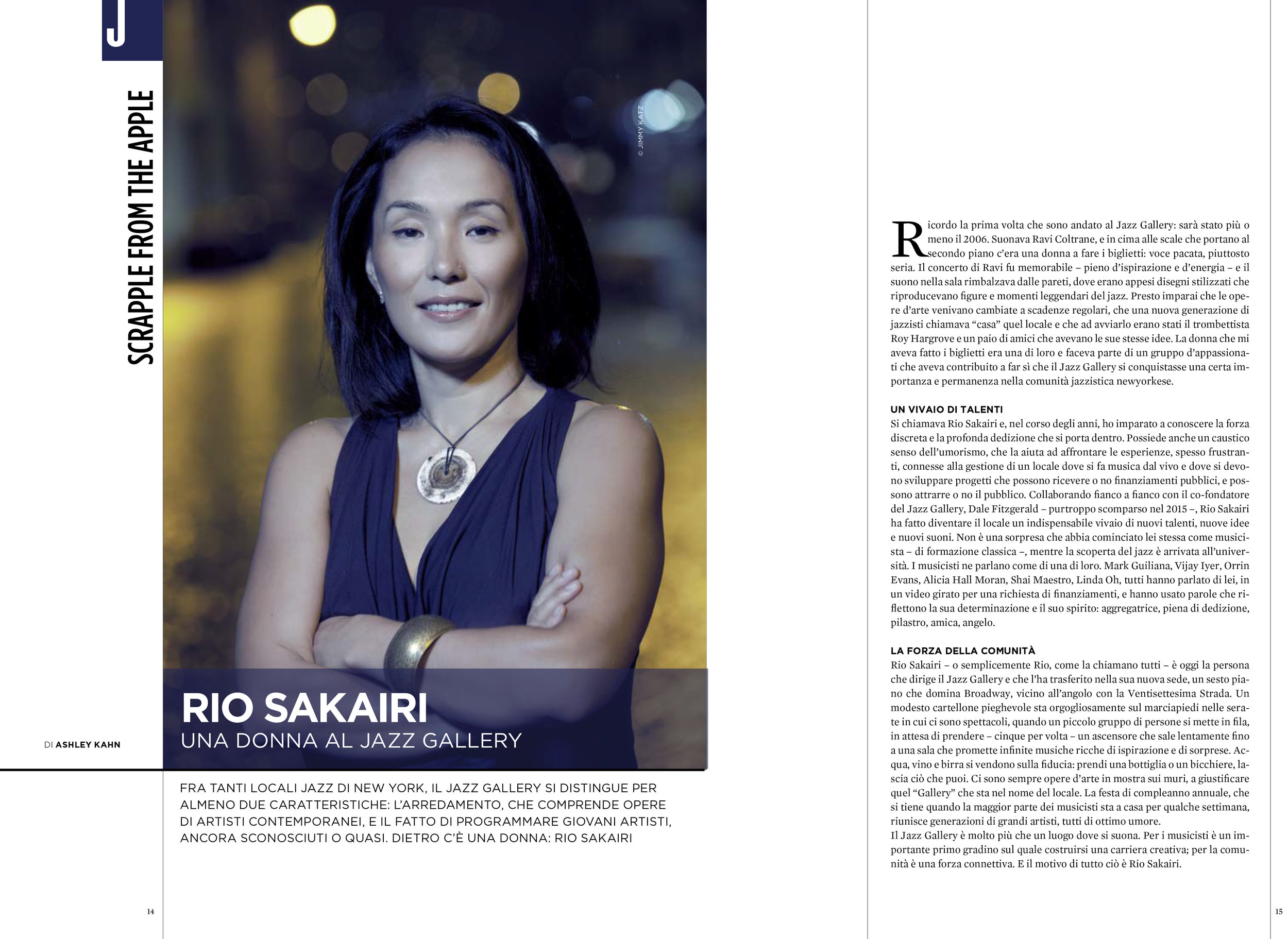
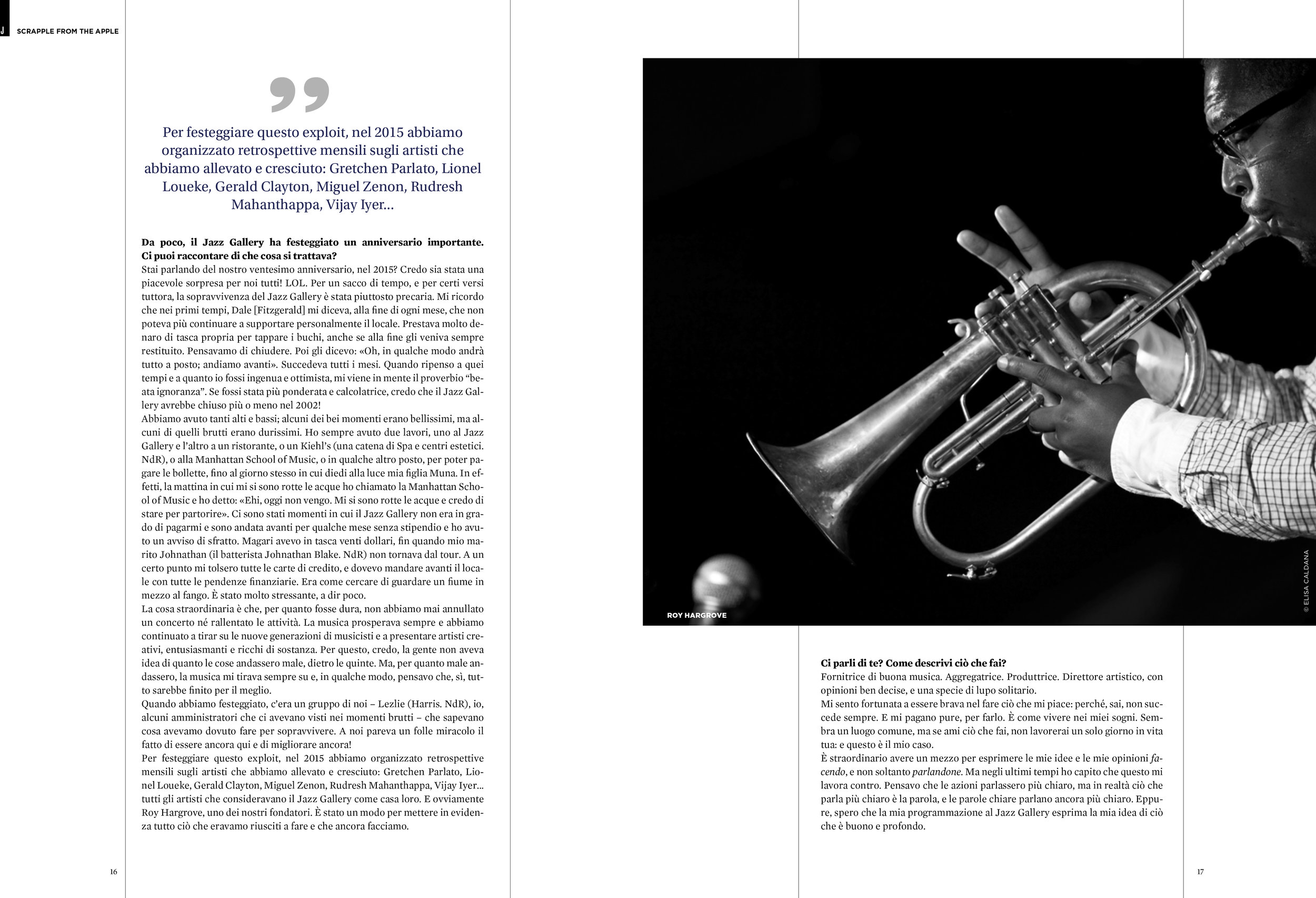
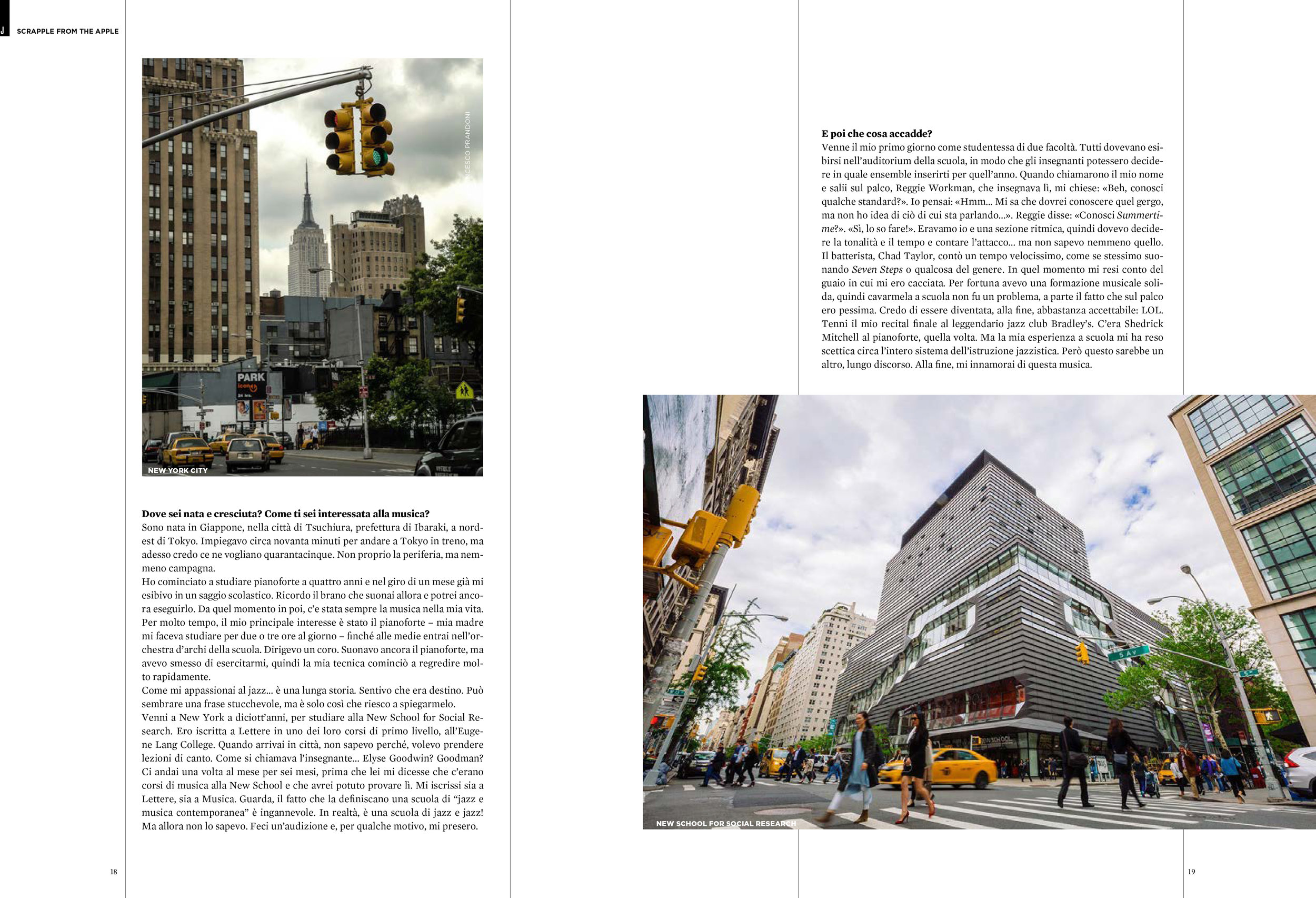
J104_Sakairi.pdf-1.jpg
J104_Sakairi.pdf-2.jpg
J104_Sakairi.pdf-3.jpg
J104_Sakairi.pdf-4.jpg
J104_Sakairi.pdf-5.jpg
J104_Sakairi.pdf-6.jpg
J104_Sakairi.pdf-1.jpg J104_Sakairi.pdf-2.jpg J104_Sakairi.pdf-3.jpg J104_Sakairi.pdf-4.jpg J104_Sakairi.pdf-5.jpg J104_Sakairi.pdf-6.jpg

How I Got here // JAZZIT Interview

October 11, 2018 in music, life

I have often been asked, “How did you get a job as an Artistic Director?” Well, I didn’t get a job as the Artistic Director of The Jazz Gallery. Dale Fitzgerald has given me an opportunity to build the place from ground up. Eventually, The Jazz Gallery has grown to the point where I needed an official title to the outside world and “Artistic Director” seemed befitting considering that I have been setting the creative directions for The Jazz Gallery for the past two decades.

Ashley Kahn has interviewed me a while back for the JAZZIT magazine and I talked a lot about how I got started in life, in music, and at The Jazz Gallery. Here is an original interview in English.

_____________

Not long ago, The Jazz Gallery celebrated an important anniversary. Can you describe what it was about?

Do you mean our 20th Anniversary back in 2015?  I think we were all pleasantly surprised! LOL . For such a long time, and it continues to be this way to some extent, the survival of The Jazz Gallery has been quite precarious.  I remember the early days at The Gallery, Dale [Fitzgerald, founder of The Jazz Gallery] would say to me at the end of each month that he can no longer continue to personally support the venue. He was lending a lot of his money to fill the holes, which was all paid back eventually. But we did consider closing it down. Then I would say to him, “Oh it will somehow be okay; let’s keep it going.” This went on every month. When I look back at that time and think of how optimistic and naive I was, I think of the phrase “Ignorance is bliss.” If I were more thoughtful and calculated in any way, I think The Jazz Gallery would have closed down around 2002!

We went through so many ups and downs; some highlights were so great but some of the tough times were so hard. I always had two jobs, one at The Gallery and another at a  restaurant or a Kiehl’s or the Manhattan School of Music [MSM] or wherever, to pay my own bills, up until the day before I gave birth to my daughter Muna. I actually called MSM on the morning when my water broke saying, “Hey. I’m not coming in today. My water broke and I think I’m giving birth.” There were times that The Gallery couldn’t pay me and I went a few months without pay. I would have $20.00 in my wallet until my husband [drummer] Johnathan [Blake] came  back from his tour. All of my credit cards were canceled at one point, and then trying to keep the venue going with its own deficits. It was all like wading through the mud. It was really stressful to say the least.

The amazing thing is with all the hardship, we have never canceled a show nor slowed down our activities. Music was always thriving and we continued raising the next generation of musicians and presenting artists who were creative and exciting and with substance. I think because of that, people had no idea how bad things were behind the scene.  Also, as bad as things were, music always lifted me up and somehow I thought, yes, it will all be totally fine.

When we celebrated the 20th Anniversary, there were handful of us - co-founder Lezlie Harrison, me, a few board members who saw us through the rough time - who knew what we had to do to survive. For us, it felt like some crazy miracle that we are still here and we were doing better!

To celebrate this remarkable feat, in 2015 we presented monthly retrospectives of the artists whom we nurtured and raised: Gretchen Parlato, Lionel Loueke, Gerald Clayton, Miguel Zenon, Rudresh Mahanthappa, Vijay Iyer—every artist who considered The Jazz Gallery their home. And of course Roy Hargrove one of our original founders. It really highlighted all that we had accomplished and what we continue to do.


Can you tell us about  yourself? How do you define what you do

Purveyor of good music. Community builder. Nurturer. Producer. Strongly opinionated Artistic Director and somewhat of a lone wolf.

I feel fortunate that I’m very good at what I like doing because that’s not always the case, you know? And I get paid doing that? I’m totally living my dream. It’s such a cliche but when you love what you do, you don’t work a day in your life and that is me.

I think it’s amazing that I have a platform where I can express my ideas and opinions by doing and not just talking about it. But recently, I realized that that is working against me. I thought action speaks louder but in reality, speaking speaks louder and speaking louder speaks even louder. Even so, I hope my programming at The Jazz Gallery expresses my idea of what’s good and soulful.


Where were you were born and raised, and what got you into music in the first place?

I was born in Tsuchiura city in Japan’s Ibaraki prefecture, which is located North East of Tokyo. It used to take about 90 minutes by train to get to Tokyo but I think it only takes about 45 minutes now. Not quite the suburbs but not country, either.

I started learning piano when I was 4 and was playing in a group recital in a matter of one month. I still remember and can play the song I played then. Since then, I always had music in my life. Piano was my thing for a long time—my mother used to make me practice 2 -3 hours per day—until I started junior high school when I was in school string orchestra. I conducted a choir. I still played the piano but I stopped practicing so my skills on the instrument declined very quickly.

How I got into jazz—it’s a long story. It felt like it was meant to be. It sounds corny but I think that is the only way that makes sense to me.

I came to NYC when I was 18 to attend the New School for Social Research. I was a liberal arts major in one of their undergrad schools, Eugene Lang College. When I arrived in the city, I really didn’t know why but I wanted to take a voice lesson. What was the lady’s name—Elyse Goodwin? Goodman? I saw her every week for  six months before she mentioned that the New School has a music division and I should try it out. I became a major in both Liberal Arts and Music. See, it’s really deceiving that they call the school for “Jazz and Contemporary Music.” In reality, it is a Jazz and Jazz school! But I didn’t know that. So I auditioned and for whatever reasons, I got in.

My first day as a double major came. Everyone had to perform in the school auditorium so the teachers could decide which ensemble you should be in for that year. When my name was called and I got on the stage, Reggie Workman [who is an instructor at the New School] said to me, “So, do you know a standard?” I thought, “Hmmmm. That lingo sounds like something I should know but I have no idea what that means…. ” Reggie said, “Do you know ‘Summertime’?” “Yes, I can do that!” It was me and a rhythm section so I had to call the key, tempo, and count the tune off—but I didn’t know even that. The drummer Chad Taylor counted off a really fast tempo like we were playing “Seven Steps…” or something. At the moment I realized the severity of the situation. Luckily, I had very strong musical training so getting through the school presented no issues, except that I was a terrible performer. I think I became kind of ok, eventually, LOL. I did my senior recital at the fabled jazz club Bradley’s. Shedrick Mitchell was on piano for that. But going through the school experience makes me skeptical of the whole jazz education thing. But that’s another long discussion.

In the end, I ended up falling in love with this music.


So how did you shift into  doing event production?


Growing up, I was always producing events, parties, concerts, and whatever. I love coming up with ideas, planning, getting people together, and organizing.  This started really early on so I can’t really tell you about my first experience. But I can tell you how I got to be at The Gallery.

In 2000, I decided to participate in the Alaska AIDS Vaccine Ride. Each participant made a commitment to complete a bike ride from Fairbanks to Anchorage (510 miles!) and get sponsored for minimum of $5000 to contribute to the cause. This was before the internet and emails so I did a letter-writing campaign and hosted fund-raising parties but did not reach the goal, so I decided to produce a fund-raising concert.

I really didn’t know anyone in the music business at that time except for a few friends—Marc Cary, James Hurt, Corey Glover from Living Colour, and Sarah Jones all agreed to donate their performances but I needed a venue. I remembered there was this guy Dale whom I met through my ex-husband who used to play in Roy [Hargrove]’s big band in late 90s, who had a space in SoHo, some gallery or whatever. I called him and he let me use the 290 Hudson really cheap. I produced the concert and it raised a little over $2K and was a great success!!

Dale then asked me if I want to help him around The Gallery when they had performances. He has just started the Jazz Cubano series with [saxophonist] Yosvany Terry — one show a week on Thursdays. I was working at Kiehl’s then. I’d come in on Thursdays after work and clean the space, set up the stage, make sure the bathroom was clean, and take money at the door. That’s how I started at The Jazz Gallery.

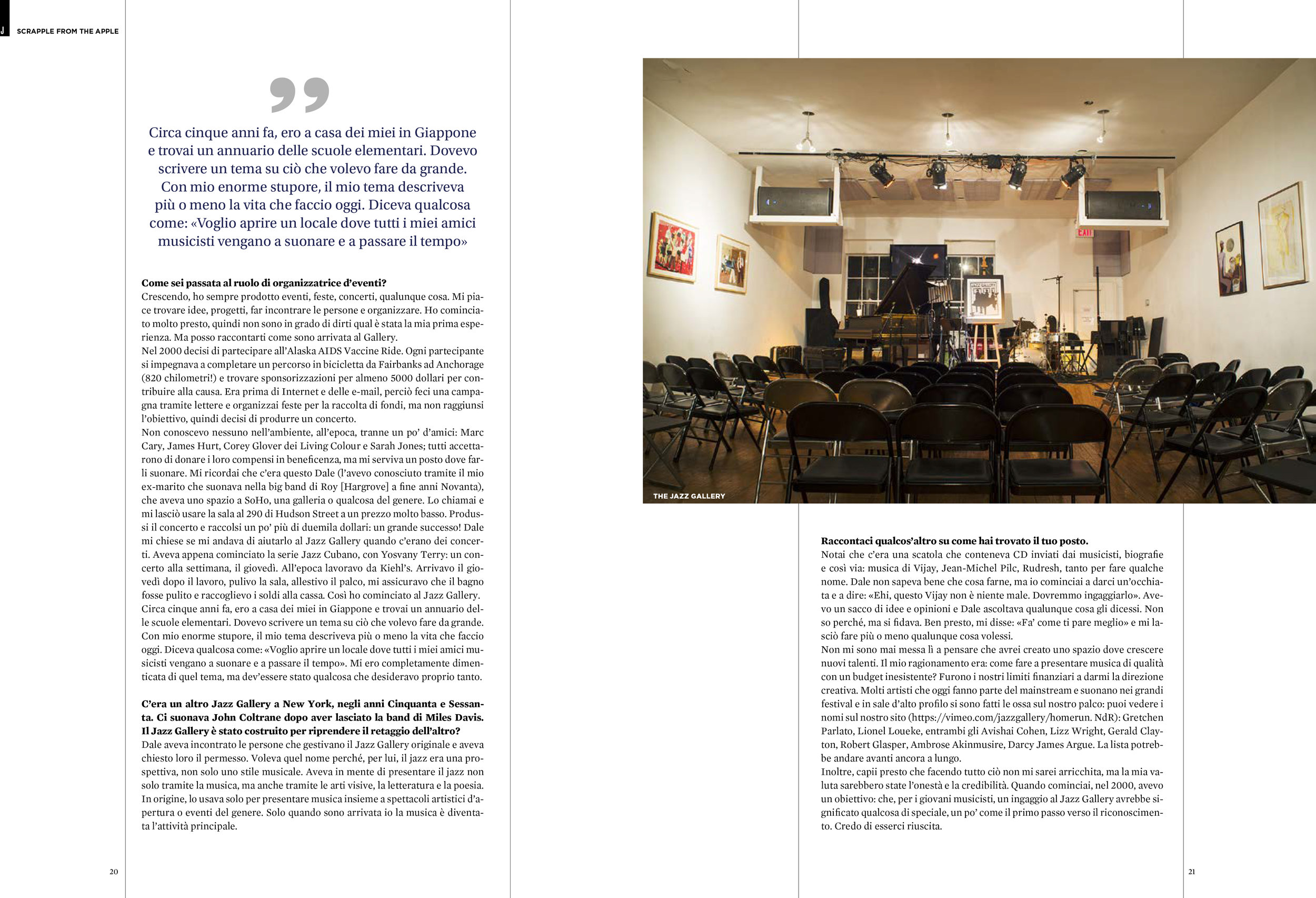
About five years ago, I was visiting my parents in Japan and I found a yearbook from elementary school. I had to write an essay about what I wanted to do when I grew up. My essay, to my astonishment, pretty much describes the life I have right now. It said something like, “I want to open a coffee shop where all my friends who are musicians come to play and hang out.” I completely forgot about that essay but it must have been something I really, really wanted.


There was another Jazz Gallery back in the ‘50s and ‘60s in New York City. John Coltrane played there after he left Miles Davis’s band. Is this Jazz Gallery built on the legacy of the other?

Dale actually met the guys who had the original Jazz Gallery and asked for permission from them. He wanted that name because to him, jazz is a perspective, not just a style of music. He had the idea of presenting jazz through not only music but visual arts, literature, and poetry. Originally he used to only present music in conjunction with art show openings and events like that. It was not until I got there that music became more of the focus.


Tell us more about how you found your place there.

I noticed that there was a box with submission CDs and bios and what-not, music from Vijay, Jean-Michel Pilc, Rudresh, just to name a few. Dale wasn’t doing much with it so I started checking out these packages and I would say, “Hey, this Vijay guy sounds kinda good. We should book him.” I had loads of opinion and ideas and Dale was open to whatever I had to say. For some reason, he trusted me. Soon enough, he said, “Do what you think is good” and let me do pretty much whatever.

I never started out thinking I’m going to create a space to nurture young musicians. My thought process was how can we present quality music with this non-existent budget. So our financial limitations gave me the creative direction. Many cats who are now mainstays at big festivals and high-profile venues cut their teeth on our stage—you can see the names on our website: Gretchen Parlato, Lionel Loueke, both Avishai Cohens, Lizz Wright, Gerald Clayton, Robert Glasper, Ambrose Akinmusire, Darcy James Argue. The list goes on and on.

I also quickly realized that I might not get rich doing this but my currency could be integrity and credibility and trust and respect. When I started in 2000, I had a goal: that, for young cats, getting a gig at The Gallery would mean something special—like their first step to being recognized. I think we achieved that goal.


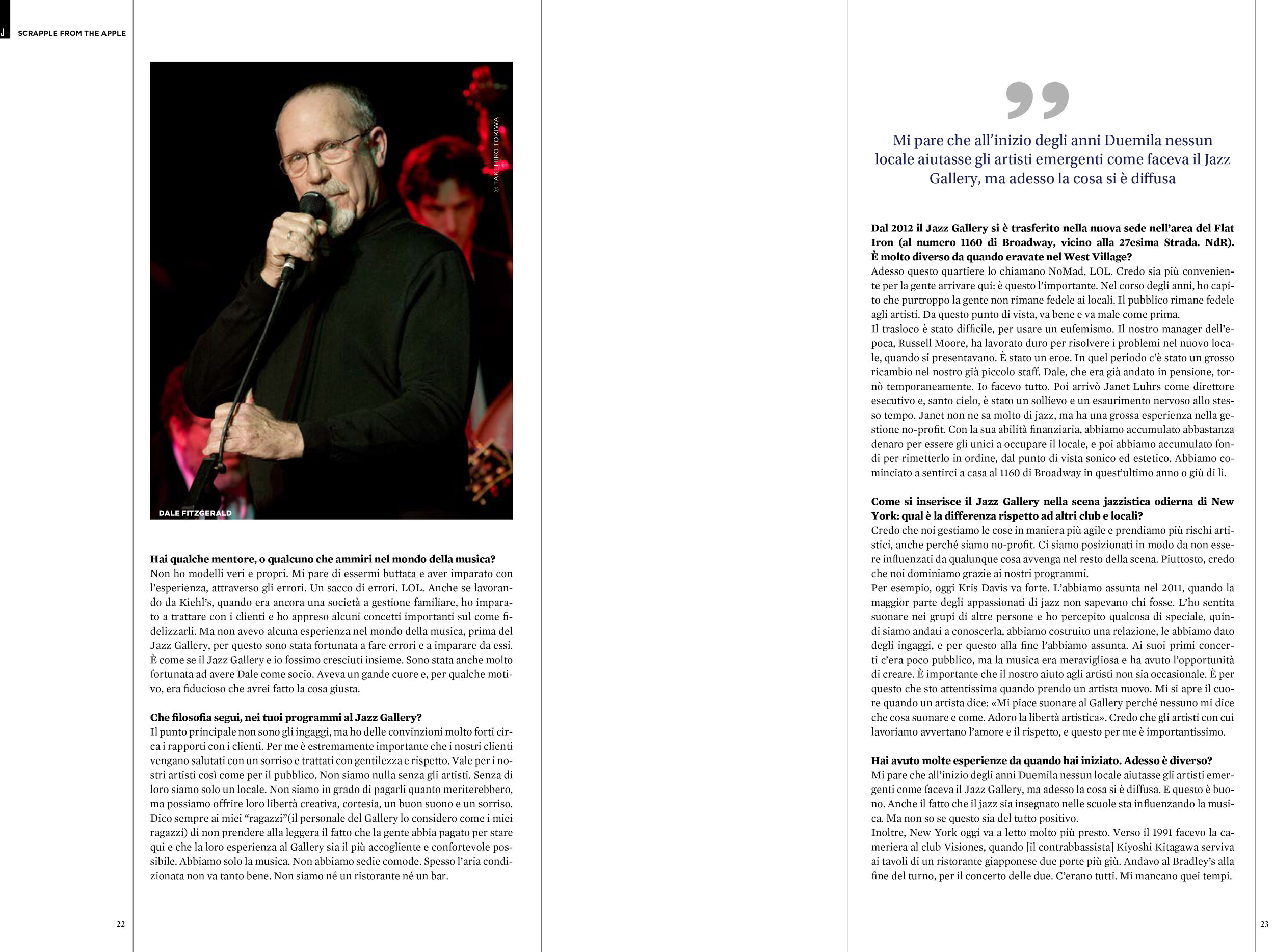
Do you have any mentors or someone you look up to in the music business?

I have no role model per se. I feel like I waded into the water and learned my own way through trials and errors. A lot of errors. LOL. Though working for Kiehl’s while it was still family-owned company, I learned about customer service and some important ideas about creating loyalty. But I had no experience in music business before The Jazz Gallery so I was lucky to be able to make mistakes and learn from them. It’s like The Jazz Gallery and I grew up together.  I was also very lucky that I had Dale as a partner. He had a big heart and for whatever reasons, he trusted me to do the right thing.


What’s your your programming philosophy at The Jazz Gallery?

It’s not about the booking but I have a very strong views about customer service. It’s super important to me that our customers are greeted with smiles and treated with kindness and respect. That goes for our artists and for audience members. We are nothing without the artists. Without them we are just a space. We are not able to pay what they deserve to be paid but we can offer a creative freedom and courtesy and good sound and smile. I tell my “kids”—the staff at The Gallery who I feel are my kids—not to take it lightly that people paid to be here and that their experience in The Gallery should be as welcoming and as comfortable as we can make it. We only have music. We don’t have comfortable chairs. Our air conditioning is often not so great. We are not a restaurant nor a bar.


Since 2012, The Jazz Gallery has been in its newer location in the Flat Iron area [1160 Broadway, near 27th Street]. Is this new neighborhood very different from where you used to be in the West Village?

They call this area NoMad now, LOL. I think it’s more convenient for people to get here—that’s about it. I realized over the years that sadly there is no loyalty to venues. Audience are loyal to the artists. In that sense, it’s as good and bad as before.

Moving was difficult, to put it mildly. Our House Manager at that time, Russell Moore, worked so hard to resolve issues at the new space as they came up. He was such a hero. There was a huge turnover in our already very small staff around the same time.  Dale, who had retired, came back temporarily. I was doing everything. Then Janet Luhrs got on board as our executive director and, Oh my god, that was a relief and nerve wrecking at the same time.

Janet doesn’t know much about jazz but has a very very strong background in nonprofit management. With her financial acumen, we have raised enough money to be a solo occupant of the space, and then raised funds to really spruce up the space, sonically and cosmetically. 1160 Broadway has begun to feel like home this past year or so.


How does The Jazz Gallery fit into the NYC scene now—how is it different from other clubs and venues?

I think the way we run things is nimble and we take more risks artistically, partly because we run as nonprofit. We have positioned ourselves in a way that we are not influenced by whatever is happening in rest of the jazz scene. Rather, I think we lead by our programming.

For example, [pianist/composer] Kris Davis is hot right now. We commissioned her back in 2011 when a majority of jazz people didn’t know who she was. I heard her as a side person with other groups and heard something special so we got to know her, built a relationship, gave her gigs, and that led to us giving her commissions. Her first performances were poorly attended, but the music was amazing and it gave her an opportunity to create. It’s important to me that our support of artists are not one-offs. This is why I’m super careful when I take on a new artist.

It warms my heart when artists say, “I love playing at The Gallery because they don’t tell me what to play and how to play. I love the artistic freedom.” I think artists we work with really feel the love and respect and that is very important to me.


You’ve witnessed a lot since you started. Are things very  different now?

It seems that no venues were putting support behind emerging artists like the The Jazz Gallery was doing in early 2000 but it seems like it’s a thing now. That’s good. And jazz being taught in schools is really affecting the music itself. I don’t know if that is all positive.

Also, NYC goes to bed much earlier now. I used to waitress at the club Visiones around 1991 when [bassist]  Kiyoshi Kitagawa waited tables at a Japanese restaurant two doors down. I would go to Bradley’s after the shift there for their 02:00 set. Everyone would be there. I miss that.


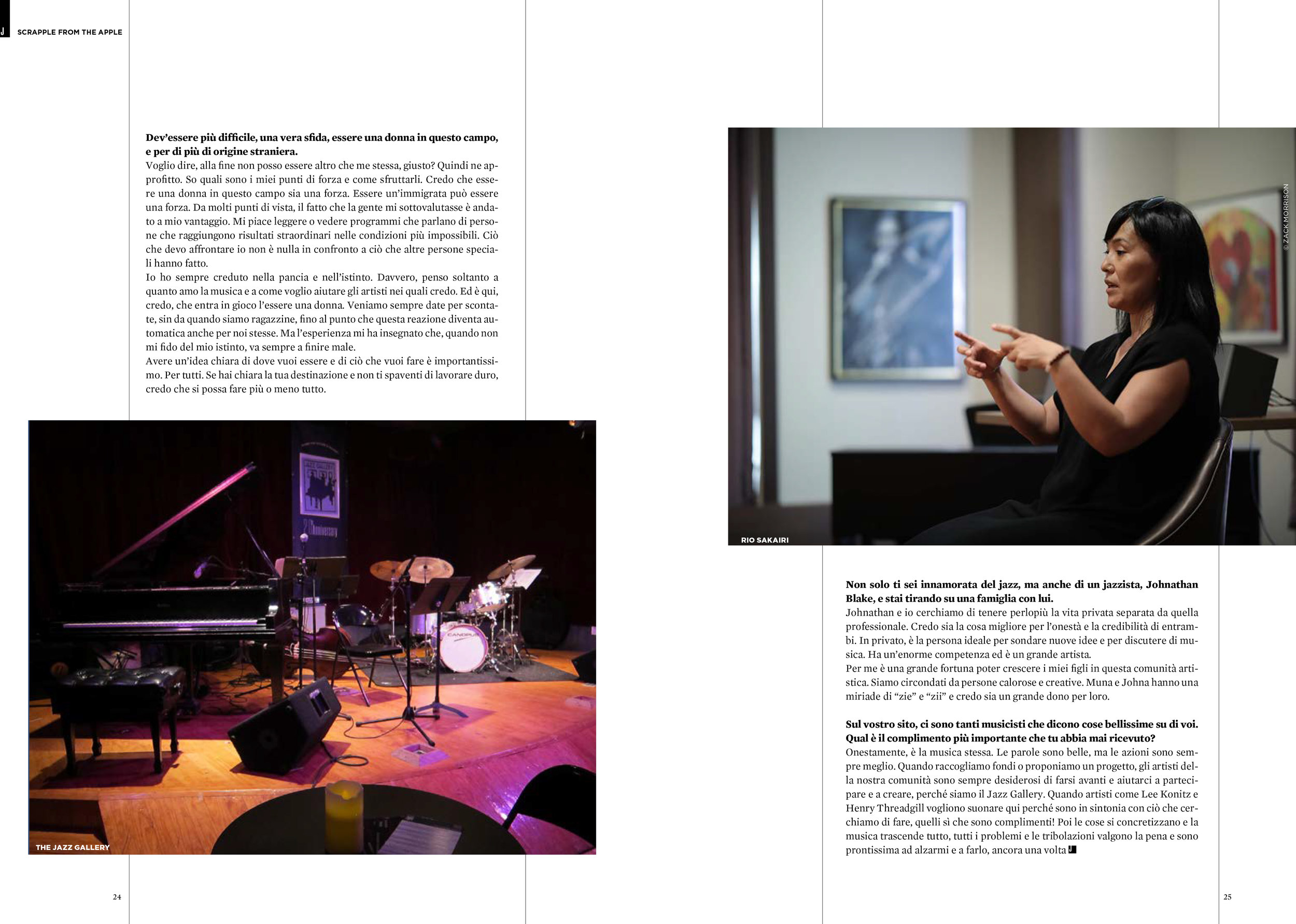
Things must be different — and more challenging—being a woman in this the business, and originally from overseas.

I mean, ultimately I can only be me, right? So I take advantage of that. I know my strengths and play to them. I think being a woman in this business can be a strength. Being an immigrant can be a strength. In many ways, it’s been to my advantage that people underestimate me. I love reading or watching about people achieving amazing things under the shittiest conditions. What I’m dealing with is nothing compare to what other amazing people are doing.

I have always been about gut feeling and instinct. I really only think about how much I love music and how I want to support the artists I believe in. That’s where being a women comes in, I guess.  We are constantly second-guessed since the time we are little girls to the point that that becomes your own reaction to yourself. But I have learned from the experience that doubting my instinct never ends well.

Having a clear picture of where you want to be and what you want to do is really important. For anyone. If your destination is clear and you are not scared of hard work, I think pretty much anything is doable.


Your website includes so many musicians who have great things to say about you. What’s the most meaningful compliment you ever received?

Honestly, the music itself. Words are great but actions are always better. When we do fundraiser of any kind or propose a project , the artists in our community are always willing to step up and help and participate and create, because it’s The Jazz Gallery. When artists like Lee Konitz and Henry Threadgill want to perform here because they resonate with what we are trying to do. What compliments those are! Then when everything comes together and the music transcends everything, all the  troubles and tribulations are totally worth it and I’m totally ready to get up and do it, again.


Tags: life, music, herstory, The Jazz Gallery
bass-guitar-chord-close-up-96380.jpg

Untitled - For Me'Shell

October 10, 2018 in poetry

I am drunk from beats
Words swim out of her mouth
Sucked into my ears
Stir up sensations deep down
I want to rip myself inside out.

My movements are
Not my own any longer.
She who plucks with
Her fingers and her soul
She who summons
Our hidden dreams
She who commands our
Unthinkables into distant possibilities
She
With a sway of her hips
Controls my everything
At this very moment.

Beats are so articulate yet
She implies
She suggests
She whispers vagueness
Contradictions so sweet
I want more.

But it is all too much
Please
I cannot take it any more but
Don't stop
Please.


Tags: meshellndegeocello, poetry, music, fangirl
JG_Stage_3 (1).jpg

Love Is Money

October 08, 2018 in music

The bottom line.

Everyone should pay at the door.

I know it’s cool to be let in to the venue like you are one of the cats but if you are really cool, you’ll put some money in the pot.

At The Jazz Gallery, we extend courtesy of free admission to anyone who’s ever led a band on our stage. I know that we are not paying living wages to the musicians and most of the times, leaders dig into their own pockets to pay the bands so that they can present their projects. The Jazz Gallery helps you to work out your ideas in front of the audience and provides opportunities for musicians to be heard. One thing we are not providing…. Is a big fat check at the end of the night. But I’d like to think there is a symbiotic relationship between musicians and The Jazz Gallery. Each has what others need. Free admissions to band-leaders is our way of saying thank you. It’s our way of saying I’m sorry we are not paying enough. It’s our way of showing respect to the work you put into it.

But, really, even then, everyone should pay.

Because that’s how we show that we care and that’s how we ensure that the business we care about continue to exist and that you can continue to present music in an adequate space.  That is how we support this music we love. And money is the only real way that you can offer support. 

I think I should explain how non-profit arts organization works so that you get why I’m always like, “everyone should pay!!” Most of the funding we receive from government agencies (such as NEA, New York State Council on the Arts, Department of Cultural Affairs of NYC) and private funders (such as Jerome Foundation, Rockefeller Brothers Fund, etc.) comes in the form of what is called “project grant.” This means that you propose a project (like The Jazz Gallery Residency Commission, Fellowship, Mentoring Series, etc.) to them and they give you money to do it. And the money comes with all kinds for restrictions. One of my favorite blogs, “Non-profit with Balls” author came up with what he calls the Baker’s Dilemma Game to illustrate the complexity and nonsensical ways the project grants function (or not function?): 

“Basically, a group of five siblings want to pool their money together to buy a cake for their parents’ anniversary party, but each has restrictions on what his or her money can be spent on. John will pay up to $7, but his money cannot be used for eggs or electricity, and it will pay for no more than 1 stick of butter. Steven will contribute up to $5, and will pay for anything except flour, but only if another person contributes an equal amount. Sue will pay up to $5, but her money can only be used to buy eggs, sugar, or butter, but not the full amount of either. Etc. Your group, the pastry shop, has to figure out how much each sibling is paying for which ingredient of the cake.”

Project grants will  never pay for the 100% of the total project cost. When they give you the grant, they never give you 100% of what you have asked for. This creates a very difficult situation for small organization (like The Jazz Gallery). If we get a grant, even if we are awarded 30% of what is needed to do the project, we have to somehow make it happen. If we can’t come up with the money to fill the gap, getting a grant ends up creating deficit. They money has to be spend according to the guidelines: if we get the money to pay for a chair, we can’t buy a table. 

Two things are most important to a presenter like The Jazz Gallery: Space and staff. Without these two things, we can’t operate. And having a performance space incurs so many expenses. We have to have AC. We have to have insurance. We have to keep the place clean. We need electricity and wifi. We need to have our garbage hauled. Things break all the time.  If people are playing music in the space, we have to pay music rights organization. The list goes on. It’s really expensive. BUT none of the project grants pay for that. They want to pay for the projects. Not for the space and not for the staff. So what are we to do?

Additionally, none of the expenses are negotiable, EXCEPT for human resources. Rent is not negotiable (We are in NYC!). ConEd is not negotiable. Insurance, no. Contractors, no. So then how do we stretch our budget? We ended up making ends meet by not paying people enough and that goes from top to bottom and that goes for artists. I feel terrible about this ALL THE TIME. But my goal is to keep the door open and to keep doing what we do so that we can keep presenting music. With that goal in mind, I have to negotiate with people I least want to negotiate with: Musicians and Staff.

And this is other reason why we are constantly fundraising through Membership, gala, auction, salons, etc. Because no project grants pay for space and staff. And this is why I’m always like, “everyone pays!” Yes, $15 at the door is not much but at the same time, every dollar counts. The Jazz Gallery is the original crowdfunding and it has been supported by everyone who cares about what we do. 

Another thing. If you love this music, then you should pay. We live in a society where we show our love and appreciation by paying for it. And I don’t want to hear you being broke. Everyone who comes into The Gallery has a smartphone. Dude, if you can do that, you can pay our admission. If your family and friends are on stage, then you should pay double. You should show your love to the venue that is supporting your loved ones, and to your loved ones on stage. We all got to put the money where our mouth is.

And if you ever played at The Gallery, you know that money we collect at the door will directly be reflected on how much we pay the band. So show your love and by love, I mean pay.

When you expect to gain free admission (and have not contributed to the cause in any way), you are saying to me, to our staff, and to the musicians on the stage that we should work FREE for you. Should we? What was the last time you walked into a restaurant and said, “Hey. You should feed me free of charge. Because I hang out at a lot of restaurants. I have never paid for anything here, maybe at other places, but I frequent restaurants and I’m kinda trying to be a chef and I go to culinary school with some people who work here. So yeah, I’m gonna eat and you are not gonna charge me. Cause I roll like that.” How does that work? That does not.

The Jazz Gallery offers Membership program. It’s really affordable. Our Student Membership costs $50 annually. 30% of our shows are free to our Members and for the rest, you get $15 discount. It would be stupid not to sign up. Seriously. Show us your love so that we can show you love. 

blog RSS
Tags: The Jazz Gallery, music, money
Prev / Next
 

photo by Hiroko Masuike

I realized that I have a lot to say (I know some of you are laughing at this statement....) and I do like saying them so I thought I'd start a blog.


Past Posts

Featured
Dec 31, 2025
music
What the Future Needs
Dec 31, 2025
music
Dec 31, 2025
music
Dec 31, 2024
life
Fret Not: Covid, Trump, and Other Smokescreen That is Life
Dec 31, 2024
life
Dec 31, 2024
life
Oct 10, 2023
An Open Love Letter To…
Oct 10, 2023
Oct 10, 2023
Dec 31, 2022
music
A Rock and A Hard Place: On HARGROVE Documentary
Dec 31, 2022
music
Dec 31, 2022
music
Sep 6, 2021
life
EAT WELL PART II
Sep 6, 2021
life
Sep 6, 2021
life
Jul 22, 2021
life
ON CLARITY
Jul 22, 2021
life
Jul 22, 2021
life
Feb 18, 2021
poetry
GPS
Feb 18, 2021
poetry
Feb 18, 2021
poetry
Jan 20, 2021
life
A REMINDER (MAINLY) TO SELF
Jan 20, 2021
life
Jan 20, 2021
life
Aug 10, 2020
music
LOVE IS MONEY, MORE THAN EVER
Aug 10, 2020
music
Aug 10, 2020
music
Apr 28, 2020
poetry
ANCIENT
Apr 28, 2020
poetry
Apr 28, 2020
poetry