I was sitting behind the stage at the Monterey Jazz Festival where Ron Carter and Herbie Hancock were performing a set as a duo. And this was the first time they were doing so. Maestro Carter is 89 and Herbie is 86. The stage was big, the audience large, and the expectations were very high.
They are both masters, rather, architects of this music and in some ways they can do no wrong. If you are a trailblazer, the trails you decide to make would be the ways. We all have been following after the musical trails they laid out. Their musical lives are the history of modern jazz. They both explored the field and opened many trails for us. Now they are on stage at the Monterey Jazz Festival and it feels like they are back to where they started. Two remaining members of the Miles Davis Quintet paying homage to their late boss. I can’t even begin to imagine what that must feel like.
Our accomplishments and the trails you leave behind can sometimes be a ball and chain. It gets harder to do things that can potentially make you fall on your face as you age. It’s also hard to do things that you used to do really well but can’t do like when you were in your 20s. Imagine falling off of your bike. It’s nothing when you are 10 but doing that at 55 could be much more painful and embarrassing and yet you don’t want people to know that you are hurting. When you are nobody, you fall but since nobody was watching, according to quantum physics, you didn't really fall. It hurts less and you brush it off and you move on. But not when you are Maestro Ron Carter and the one and only Herbie Hancock; every key stroke and every pull are observed intently. Their performance will be recorded, analyzed, and repeatedly consumed.
I looked out into the audience at one point and I felt such a feeling of sonder: how their music has been the soundtrack to the lives of each audience member and how each of us has different memories and emotions attached to the music and we came to Monterey with so much history and remembrances and joy and pain and anticipation. In that open air stadium filled with so much adoration and expectations, Ron and Herbie were just steady and present.
It is a wondrous and beautiful thing to witness. Two masters who have been at it for several decades still know how to be in the moment and be vulnerable in front of thousands of people. They played with tenderness, care, and humor. It felt intimate and spacious. What a courageous thing to do and what a lesson that is for all of us. I wished to be so at peace and yet be searching and be vulnerable like them when I grow up.
At one point, Herbie played Maiden Voyage solo. He wrote the tune in 1965 when he was 25. 61 years later, he played the song which has been played by literally everyone who ever wanted to learn how to play this music since then and yet still his solo rendition filled the stadium with reverent silence. What an incredible thing to have created something that has been loved for decades in the genre that seems to morph so rapidly, so much so that I spend my days thinking about the question of “what is jazz?” This sounds so corny but I thought to myself, “wow. I’m witnessing something important and historical.”
Excellence, I think, is really important. It’s a baseline. But beyond that, it’s not the perfection that resonates nor the point. It’s how you show up with love. I don’t really know how to describe what I felt that night otherwise.
Photograph by Hiroko Masuike for the New York Times.
New York Times →
A little over a year ago, Stephanie Jones did a feature on me for the New York Times. My conversations with her went all over the place and combined that with the character limits, I know she had a difficult time making sense of my stories and fitting them all in. I think she did a great job and the article gives a good sense of what I do and how I carry myself in the world.
AT 30, THE JAZZ GALLERY REMAINS THE FORCE. RIO SAKAIRI IS AT ITS HEART.
The nonprofi t venue’s artistic director has long booked and guided artists from her gut.
By Stephanie Jones
February 17, 2025
Rio Sakairi patted around inside her purse and retrieved a key that unlocks theelevator at 1158 Broadway. Exiting on the fifth floor, she glanced toward the blackdoor leading to the performance space in Manhattan’s Flatiron neighborhood, where The Jazz Gallery has made its home since 2012. The saxophonist BenWendel’s four-vibraphone band was about to perform on this January night: “This one you want to hear from the beginning,” she said.
The Jazz Gallery has long had a reputation as a live music venue where artists take risks and stretch their sound. This year, the nonprofit is celebrating its 30thanniversary; Sakairi has served as its artistic director since 2000. (She received the formal title in 2009.)
“It’s really just the music that’s driving my decisions,” she said, settling her coat ona sofa in the Gallery’s board room. Sakairi, 53, has been programming the venuefor about as long as she’s been working there. “When people ask me what I play, Ijokingly say, ‘I play musicians.’”
Sakairi is credited with nurturing an environment that has given major artists an early boost, including Gretchen Parlato, Linda May Han Oh, Gerald Clayton, Lizz Wright, Vijay Iyer, Ambrose Akinmusire, Joel Ross, Miguel Zenón, Kris Davis and Robert Glasper. “Absolutely my first real show as a leader” was at the Gallery, Glasper said via email, adding that the venue “was always open to me exploring what was in my mind and working it out live in front of an audience.”
For as long as these artists can remember, Sakairi has been a fierce, albeit frank advocate of artistic expression and development.
“We have this saying — and I’m pretty sure she knows — ‘Keepin’ it Rio,’” the saxophonist and electronic wind instrumentalist Dayna Stephens said in a phone interview. “She doesn’t hold back.” While Sakairi’s feedback can be “very assertive and very straightforward,” he said, “there’s always advice for how to get to where you want to go.”
Founded in 1995 by the academic turned music presenter Dale Fitzgerald, the singer and WBGO on-air host Lezlie Harrison and the trumpet master Roy Hargrove, the Jazz Gallery began as a haven for creative improvisers and experimental composers, and provided a daily rehearsal space for Hargrove. (For several months, his label Verve picked up the rent.) Fitzgerald, who was Hargrove’s manager, located the original space on Hudson Street in SoHo, and the trio dreamed up a spot that could serve as an incubator for musicians and host art exhibitions related to jazz.
Sakairi grew up far from that original location — in Tsuchiura, Japan, where she began playing piano at age 4. Later, she joined her middle school’s string quartet, then served as her high school’s choir conductor. “I always had music in my life,” she said.
In Tsuchiura, her private K-12 school focused on independent thinking and problem-solving. One seventh-grade trip included a daylong hike to a campground. “They give you a map and divide you into groups of six, and then we have to get there on our own.”
Skilled in rhetoric, Sakairi used her father’s belief that people should “live for their dreams” to her advantage, convincing her “very strict, old-school” parents that she should earn a psychology degree in a foreign country. At 19, she immigrated to New York to attend the New School’s Eugene Lang College of Liberal Arts, and soon found her way to the university’s School of Jazz and Contemporary Music.
After graduation, Sakairi took a job at the skin-care store Kiehl’s, enrolled in a music business course at Baruch College and frequented music venues and art spaces across the city, listening and learning. “Music continued to be a big part of my life,” she said. In 2000, after she presented a fund-raiser at the Gallery, she heard that Fitzgerald was looking for assistance and seized the opportunity: “I’m thinking, Oh my God, this is my foot into the music business door!” she recalled. The job paid $50 per night, and she’d head straight to the venue from her day job.
Her duties included cleaning the restroom and paying the bands. But Sakairi quickly realized she had an ear for booking. On Sundays, she’d come into the building to listen to CD and cassette submissions. “A couple months into it, I said, ‘This guy Vijay Iyer, he sounds pretty good. We should give him a gig.’”
One evening in 2001, the saxophonist T.K. Blue called to ask whether the Gallery would host Randy Weston’s 75th birthday celebration. Fitzgerald reasoned the date was too soon and hung up. Sakairi didn’t hold back. “I said, ‘Dale! What are you doing?’” she remembered. “‘Pick up the phone and call him back — we are so doing Randy’s 75th birthday!’”
Before long, Fitzgerald handed the booking role over to his protégée entirely. Sakairi’s vision was clear: When “a young musician plays here, it means something.” Since then, she has fostered artistic breakthroughs by concentrating on development, acting as a kind of career consultant with an eye on artists’ onstage presence and even their promotional plans. “I try to make a point,” she said. “There’s no there. There is a process.”
When Sakairi reviews submissions, she leans on her gut: “People ask me all the time, ‘What do you listen for?’ It’s really a feeling,” she said. Stephens, who received the Gallery’s 2024 fellowship commission for mid-career artists, noted that Sakairi also has a pulse on professional development. “She has a very innate sense of what the next move for a particular artist is at their stage,” he said.
Sakairi’s petite stature belies her commanding presence. (“For a long time people either ignored or underestimated me,” she said.) As musicians orbit around her, she greets each of them with genuine warmth: a double-palmed handshake, a twinkling sigh, a hug. Over her years at the Gallery, she’s demonstrated poise under pressure. “There’s like five eviction notices in these documents,” she said, motioning to a file cabinet. During its tumultuous move from Hudson Street, the Gallery didn’t cancel a single booking. And when Covid hit, the venue rebounded with award-winning online programming.
“I rarely ever panic,” Sakairi said. “I just say, ‘Eh, it’ll be all right.’”
The Gallery’s deputy director, Nerissa Campbell, has seen Sakairi navigate these hard times. “Rio’s philosophy, which I think has become an ethos of sorts for The Jazz Gallery, is that ‘there are no jazz emergencies,’” she wrote in an email, adding that Sakairi’s joyful disposition eclipses her frustrations.
Today, Sakairi sits on arts panels and has helped curate prominent jazz festivals including Newport and North Sea. What she would like to see now is more young musicians taking chances. Years ago, “There was a bit more casualness about playing at the Gallery, which I think is necessary for music to develop,” she said. She’d like to fund a storefront annex where up-and-coming artists can perform and “learn to be compelling for people to want to give them a tip.”
Still, artists of all ages and stages of their careers continue to view the Gallery as a premier venue for creativity. “Rio and the Jazz Gallery are so special in the way that they just allow for art to happen,” said the singer and research artist Sirintip, who petitioned Sakairi for the Gallery to sponsor her interdisciplinary multimedia project “Mycelium” last year. “She’s just very open.”
The venue is celebrating its 30th anniversary throughout 2025 with special performances featuring Iyer, Oh, Blake, Kenny Barron, Ron Carter, Jeff Watts and Yosvany Terry, as well as a screening of a vintage Hargrove performance. (The trumpeter died at 49 in November 2018. Fitzgerald died in 2015.)
After two and a half decades at the Jazz Gallery, Sakairi’s tenure is part of the organization’s history. Recently, she uncovered a journal entry from childhood: “It said something like, ‘When I grow up, I want to open a coffee shop or restaurant where my friends who are musicians would come and play music, and this would be a place where people can hang out and have a great time,’” she said. “When I wrote that, I must have really wanted it. Because I feel like the universe heard me.”
What the Future Needs
One of my all-time favorite quotes is by the late Greg Tate. He said, “the future needs jazz more than jazz needs the future.” It has been true all along and it cannot be truer at this moment in time.
Jazz embodies American ideals. How ironic is it that these ideals are molded into a tangible art form by the group of people who were forced to come to this land and stripped of everything by the people who came here with hopes to manifest the ideals. Then again, it does make sense that freedom, inclusion, compassion, open dialogue, harmonies (consonants and dissonants), and collaborations were best understood by ones who were denied the basic elements of humanity, of the essential ingredients that would make the American ideals possible.
In order for anyone to be a good jazz artist, first you must have healthy respect for what came before you. Knowing history and tradition is important not so much because you need to abide by them but because you must know what to avoid and where to go next.
Jazz requires you to be fluent in its language, which is constantly evolving as the participants expand. Jazz is welcoming to everyone and has a capacity to accommodate differences. You must learn to listen really well and really closely and be present. As in conversations, you can listen half-heartedly and give cookie-cutter replies or you can pretend to listen and wait for your turn to say what you want to say rather than reacting to what is actually happening: however, we all know that is not a fun and meaningful conversation. You feel no connection to others and there are no discoveries. You are just passing time. You need fluency, patience, and openness for the dialogue to be something worthwhile.
Music always sounds better when you allow space, for yourself and for others. When the band members understand the common goals and work together in the service of music, there will be magical moments of joy and excitement. We, including the audience members, feel connected, heard, and understood. I don’t know why that is but over the past 30 years, I have experienced many moments like that where we were happy that we bore witness to the specialness and we felt special and connected by the experiences.
Jazz teaches you to embrace dissonants and musicians work together to either find resolutions or simply agree and be happy to just let them be.
Jazz requires you, also, to work tirelessly on your own individual excellence so that collective freedom and harmonies are maintained on the bandstand, and the music can get to a higher place. And because we all understand that personal struggle, we are respectful with each other and I seldom see jealousy or bitterness. It may be a superficial display of civility and common decency (and they may secretly be envious and angry) but I think politeness is always nice and makes the world go around. What I often see is the mutual respect and camaraderie and fellowship. I should mention, though, hidden or otherwise, these dark feelings eventually and surely eat away at your music so it is always advisable for you to get with yourselves and deal with them early on.
As a musical art form, jazz knows how to create room for everyone, sometimes even at the price of sacrificing itself. It is creative and adoptive. For me, the true improvisation that defines jazz is not the musical part of it (there are other musical traditions where improvisation is an integral component) but its perspective and adoptability. Black people, with the strength and resilience of their spirits, improvised joy and beauty out of impossible situations. That, to me, is the true spirit of jazz and genius of it.
There are many ways jazz can teach all of us how to be a good citizen and this is why the future needs jazz more than jazz needs the future as Greg aptly said more than 30 years ago. Jazz has always been and is and will be fine as jazz is timeless because it is the reflection of our true nature and the best selves, of what our souls really desire.
WhataWin
Fret Not: Covid, Trump, and Other Smokescreen That is Life
Here we are. On the verge of 2025. It is 5:41 pm and I am attempting my one and only posts in 2024. I attribute this lack of blog posts to fatigue. I was really tired throughout this year and I often felt like I just had to push through purely with my will power; until I figured out that this fatigue had something to do with my hormonal changes. It’s like I am a teenager all over again except backwards. It’s amazing how quickly I can lose my perspectives on things because the physicality of being a human is so strenuous. This life and the nature of our existence is not simply physical nor spiritual. We live in the place where two dimensions collide and the expressions of that collision are controlled by us, intentionally or otherwise.
And that segways into what I want to say before 2024 ends and 2025 begins. That we need not fret about what you think is coming (and how we need to think about what we want to see coming) and that we’ll be alright if we understand how this works.
Let me go back to early 2020 when Covid all the sudden shut everything down. I ran a live music venue. I rarely feel any sense of panic but this time, I was a little shook. What was I going to do? How was I gonna pay my bills and feed my kids and keep The Jazz Gallery alive? So I sat down and thought about it. I realized that the principles that make this world go around have not changed. Yes, the pandemic was happening outwardly but gravity still worked and so did the laws of manifestation. How we create our own reality has not changed. It occurred to me that this pandemic will be a period when there will be a huge gap between people who understood the nature of how this worked and people who were caught up in the surface reality. So I decided that I was going to thrive through the pandemic and then I got to work. I decided to focus on what I can control (me and my thoughts and my emotions) and by doing that, I decided to contribute to people I love and the community I care about.
Some of you have seen and been part of what we have done at The Jazz Gallery during the pandemic. I planned many online events, i.e. Happy Hours Hangs, Dance Parties, Lockdown Sessions, etc. and then The Jazz Gallery started live streaming first with no audience and then with a very small audience and then with a full house of audience as we came out of the pandemic. We continue to live stream to this day. We kept the community together and going. Not only that, we have physically expanded: the adjacent space with a comfortable lounge, a beautiful greenroom, and two additional bathrooms! The space opened in 2021 when many other venues were still shut down with no activities. I have decided that The Jazz Gallery was going to survive and thrive through the pandemic and it did.
I know how this sounds. Woo woo. But it’s a true story. And knowing what I know now, I feel prepared for what may come. As I am only one person and there is a limit to what I can do but I already know that I can at least protect my kids and keep the jazz community surrounding The Jazz Gallery together and thriving. I am not worried and I know that I am going to be just fine. More than fine.
I am hoping that I can inspire some of you who are reading this post to decide to be good in 2025 and years after that. I hope that each of you will realize that we all have tools to create the physical reality we want. If more of us do that, maybe the shift for better will start to happen at a larger scale. Yes, we need to be aware of what is happening in the world but once you are informed, put it out of your mind and instead focus on what you’d like to see in your life, in your community, and in your world. Harping on things you hate is the sure way to strengthen them and help them proliferate. Spend your energy on things you want to see. It’s not easy to focus on your vision of beauty and unity and love when it’s super stormy outside but really, that is the only sure way to start turning the tides.
I think manifesting is simple in its principle. What is hard is to remain in the feeling of joy and gratitude as if you have already received everything you have asked for. It’s really hard for us to remain in the place because it seems that we humans actually enjoy being miserable. We love sob story competitions. In order to create the reality each of us want, we have to learn to remain in that happy place regardless of what is happening and that is the work. It's very hard work but I think it’s totally worth it because it looks like the fate of the world is actually depending on it. I mean, that’s what I think.
I hope I’m making somewhat of a sense. Please be safe out there and have a happy and healthy new year!
An Open Love Letter To…
Curator’s Note:
As curator of this blog, I am constantly trying to think of and seek out different types of individuals to contribute in addition to the usual (and great!) composers and arrangers. So when I started to brainstorm recently about who has been vital to the development of new works in the idiom, it dawned on me quickly that it’s hard to think of someone more impactful than Rio Sakairi, Artistic Director of The Jazz Gallery in New York City. In addition to the Residency Commissions, which provided opportunities for dozens of composer-performers through the years, their Jazz Composers’ Showcase and various mentoring programs have helped to nurture young and emerging artists. I asked Rio if she wanted to reflect on her role in the creation of so much great music and enabling so many artists, and here’s what she had to say.
J.C. Sanford
MARCH 1, 2023
www.isjac.org
+++++
It was foolish of me to accept JC’s invitation to contribute to the ISJAC’s blog. After all, although I enjoy writing, I’m not a writer by trade and I realized that writing on demand is really hard. I can write what I want to write about but to be asked to write something appropriate for an “International Society” of artists — or perhaps any entity that is not me is way harder than I thought.
So I started by just writing, letting my mind wander. The post I was asked to write will be on a site populated by composers and arrangers who operate within the idiom we call jazz. What does that mean, to operate within a Jazz idiom? What makes Jazz different from classical composition? Is that the rhythm? Perhaps, but I have heard music composed by Jazz artists I like that feels more like classical, in terms of the feel. Is it the harmony? I don’t think so. It’s 2023 and I have heard pretty slick harmonies in Jazz, classical, even in R&B (especially when Jazz musicians are involved). It is not harmony that determines genre. Is Jazz distinguished by the practice of improvisation? Not quite. There are other musical traditions in the world in which improvisation is a big structural element. Jazz is not a mere product of these elements. Then is it the way these elements are intertwined? What are the guiding principles that make the music Jazz and not classical or R&B, or World music? The lines between these genres are blurrier than ever. They bleed into each other especially when Jazz is in the mix by way of approach or participants’ training and inclinations. Jazz has this ability to take on other seemingly unrelated elements (and if a composer is skillful), the music grows, expands, and morphs.
As I write this, the pianist Don Pullen comes to my mind. What he was doing was unmistakably Jazz (but please don’t ask me what makes it so. Lol. For the past 20 years, I’ve been in the middle of trying to figure that out myself. The closest I can get to a definition is a sensation, a feeling, and perhaps an understanding that has developed within me over 30 years of listening to music that was presented to me as Jazz.) and yet it has the elements that were previously foreign to Jazz.
I have heard some interesting (to use a euphemism) attempts at this hybrid thing. I cited Don Pullen but not everyone is as successful as he was. Some come out like a weird new breed of a dog that doesn’t really even look like a dog. I saw some photos of some weirdly mixed creatures where I can see what breed of dog got with what dog, but the end result does not look like a dog. In my 23 years at The Jazz Gallery, I have heard some attempts at fusing elements with Jazz that’s just like that weird non-dog-looking-dog.
Back to this burning question – What is Jazz? What makes a composition Jazz? I have been thinking this question out loud, so to speak, for almost 3 decades that I have been involved with Jazz. This question plagues me now more than ever for many different reasons (Institutionalization of Jazz, for one. Like Jazz is taught in conservatories!!). And when I travel far away from the source (I’m referring to New York City as the source, which I consider the Jazz capital of the world), the music that is presented as Jazz often loses the feel, texture, and aroma that makes it Jazz. In my opinion. I often think to myself on my travels to far away places, “hmmm. People can do whatever they want to do. But please don’t call this Jazz.”
This question of Jazz is something I think of almost everyday. I know that sounds like I’m exaggerating but it’s true. As someone who directs an organization called The Jazz Gallery that has, for decades, been at the forefront of this art form as it spreads into countless new territories and destinations simultaneously, I feel a bit of responsibility to ponder this question. By nurturing many young artists, even some who go on to represent the face of Jazz from the highest institutional perches, I do have quite a bit of influence on the evolution of the art form.
When one feels a bit lost, it is probably a good time to revisit the roots.
Jazz is a Black folk music. African American folk music. It’s a child born of a long and horrific labor. This music comes directly out of the experience of African Americans (which by the way is not monolithic at all, just as any other human experiences lived by any groups). It took me a long time to understand why artists like Miles and Duke as well as Nicholas Payton resist the word Jazz. They understood the word as a tool to rip Black folk music from the creator and to take away the ownership from people who created it and erase the history that fostered it. Jazz is not the first example of this. There have been intentional and persistent attempts to dehumanize Black people and their culture.
Don’t get me wrong. I’m not saying that only Black people can play Black folk music; just as anyone can be a student of Japanese traditional music, Indian carnatic music, or Cuban folk music. Similarly, all are welcome to study Jazz. But one has to understand and know where it comes from in order to embody the resilience, humor, beauty, generosity, and ingenuity that brought about this art form. This is what makes the music you play Jazz.
In a 1979 essay in the New York Times, “If Black English Isn’t A Language, Then Tell Me, What is?” James Baldwin explained this point beautifully and sharply. Although he is talking about the role of language in articulating, controlling, and protecting oneself in a hostile and difficult environment, I think the same principle could be applied to Jazz: “A language comes into existence by means of brutal necessity, and the rules of the language are dictated by what the language must convey.” I think that the word “language” can be interchanged with Black Folk Music, a.k.a. Jazz. This music would not have existed had it not been for the fact of slavery and for the unimaginable strength of spirit and creativity and hopefulness that had to be expressed for survival of their humanity.
I think that for those of us who are involved in Jazz and who are outsiders, who didn’t suffer this fate, it is utterly important to recognize that there are areas of this art form we will never really fully understand. It is only by acknowledging this reality that we can tread into the deeper end. This music is sacred. It is spiritual. Many people before me referred to spaces that present Jazz as churches. Because we feel that sacredness and the spirit. As important as the components are, it’s not the pocket, not harmony, nor the structure that makes this music Jazz.
It is to get with what binds the structural elements of this music. To know where you stand in relation to it. It is part of the self-knowledge thing, which is really important for artists anyway. And it’s been my observation that African American artists do this Jazz thing with a knowing that we (“we” mean someone like me who is not an African American) can’t quite get to. I get this because I’m from another place (Japan) where a group of people share a common cultural unspoken bond and understanding. It gives me a distinctly different feeling when I speak in a group of Japanese people. There are cultural shorthands that have been passed down for generations and in our DNA. Anyone who’d visited Japan felt this. This feeling of being an outsider. You can’t really fight that and change the tradition and customs so that you can play and be part of it. No. If you want to participate, you have to respect the rules and be a student. I’d imagine it’s like that approaching Jazz. It’s silly to be jealous of African American artists or try and claim jazz for yourself. They have dearly paid the price, trying to convey their yearning for life.
What makes the music you play/compose Jazz is that understanding. It’s not in trying to emulate but to understand your relationship to it, with the respect to its history and tradition. Find the roots and be nourished by it. Once you do, I think you’ll grow in this music because Black Folk Music a.k.a Jazz is a generous and forgiving host that welcomes everyone just as its creators. I should also add that Louis Armstrong once said, “there are some people that if they don’t know, you can’t tell them.” So there is that. Lol.
But I have witnessed musicians figuring out their relationship to the self and Jazz; making peace with who they are and who they are not and truly forgive yourself for whatever it is or it is not. It involves giving up an illusion and facade and what you are hoping to project. And be real with oneself while setting the course for your visions. It’s like walking on a tightrope. Then they grow. It is remarkable how your deep and truthful self-knowledge can affect your musical manifestation so dramatically. Your acceptance of yourself and your relationship to this music will allow you to really reach an audience in a meaningful manner. Jazz is a serious business (totally fun but real fun is always serious) and you can’t half-heartedly dance with it. It’s not for the faint of heart.
This is the end of my mind wandering, for now, triggered by a request to contribute to the blog. I love this music that gave me my life. I love this music that welcomed me with open arms. I love this music that fosters the community of creative and kind and beautiful people. I have been an observer of its morphing, for better or for worse, for the past three decades at its spearhead. Some days I’m hopeful and some days I’m weary. So I continue to ponder this question and consider how I can be a real ally. I hope you get that the thoughts I wrote here are coming from a place of deep love and care. Thank you for reading.
Photography by Ingrid Hertfelder
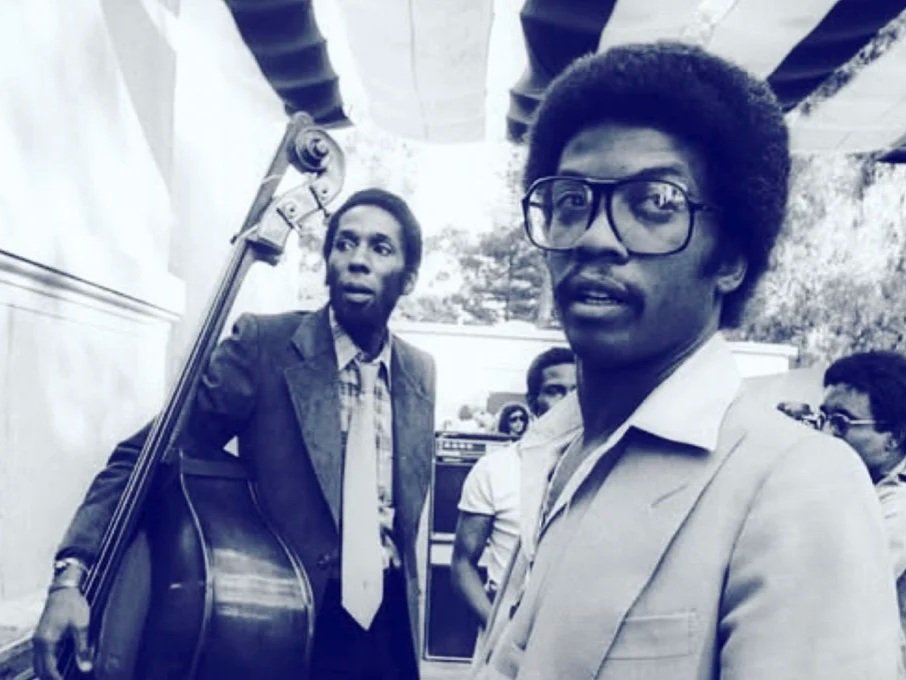
A Rock and A Hard Place: On HARGROVE Documentary
When I was a kid, I thought history was a documentation of facts told in a linear and clean fashion. But as you know, no history is that simple nor one dimensional. Any story is experienced by multiple people in their own ways, who bring their own filters of attachments, insecurity, ego, and whatever else. Another thing about history is that a story told by whoever is in power, whoever has means, whoever goes first, whoever is the loudest, or whoever bothers to take time is the one that sticks. I have been around a little over 30 years on the scene and mind you jazz scene is not that big but I have seen more than once that stories became history not because they are factual but somebody decided to tell them the way they want to and nobody bothered to point that out.
Which brings me to this "documentary" titled HARGROVE. I put the word in quotation because what I saw on the screen was vastly different from what I have experienced. The stories and speculation presented in the film was different from what I saw with my own eyes and what I personally experienced. I was there. Sometimes I was part of what happened. Some of what happened shaped me to be what I am today.
As I discussed in one of my previous posts, which was my obituary of sorts to Roy, he was, as we say, a different kind of cat. Special. For better or for worse. Incredibly gifted and bright yet so terrible at life. He was a part of a rare tribe which, in my mind, includes the likes of Baquiat and Jimi Hendrix. I don't know if their biopics are accurate descriptions of them or their lives but if so, Roy was quite like them. Both Basquiat's life and Jimi’s life on screen, told by whoever decided to tell those stories, reminded me of Roy’s that it made my heart pang. Brilliant, charismatic, self-destructive, and utterly lonely. Roy loved women and couldn't help himself. His talent and fame isolated him and he made not so great choices. It sounds so cliche and this was what made Roy a human.
Dale Fitzgerald, who founded The Jazz Galley and to whom I owe my life (because I wouldn’t have this life in music if it weren’t for Dale and without this life in music, I don’t know if I would have become me fully in the ways I am) was also Roy's business manager along with Larry Clothier (a.k.a. Ragman) who was Dale’s friend and business partner. Dale and Larry met Roy when he was still in highschool and the team began working with Roy shortly after.
Dale and Larry LOVED Roy. And Roy them. This, I know.
Dale and Larry had different ideas about how to support Roy function in the world. Dale was more idealistic and hopeful as he always was about everything. Dale thought Roy can grow up, change his habits, and do better in other areas of his life that are unrelated to music. Larry, who is a seasoned veteran (he was a manager to Carmen McRae among others) in the business and came to know Roy quite well thought otherwise. Dale tried to teach Roy basic life skills like balancing checkbooks, paying bills, feeding himself properly, doing dishes, and washing his clothes. Larry knew that Dale's effort would be in vain but he let Dale try. Dale took care of Roy on the home front and Larry traveled with Roy. In the end, Roy was so disastrous in life that Dale ended up taking care of Roy's every needs. Roy didn't know how to do anything aside from being this incredible artist. I’m kind of in awe of Roy for living his life doing only what he wanted to do. That’s the dream for many yet a few manage that.
Until I had my first child of my own in 2005, I lived in close proximity to The Jazz Gallery, Dale, and Roy. I started helping around at The Jazz Gallery in 2000, working for Dale and because The Jazz Gallery’s space initially was used as Roy’s rehearsal space and Dale was Roy’s manager, I got to spend quite a bit of time with both Dale and Roy. Dale often didn’t have time to properly take care of The Jazz Gallery because he had to do everything for Roy. I suppose that was one of the reasons why Dale had to trust me with the Gallery and I have Roy to thank for my life in music as well. Lol.
Once, Roy was arrested and in jail for trying to score some weed from an undercover officer in Washington Square Park. Apparently he couldn’t reach his usual hook-ups and he thought he could do this like everyone else. Wrong. Dale was beside himself and I remember him making calls furiously trying to get him out of the jail because Roy needed to make an appointment for dialysis and he needed to take his medication. Roy would always get into this kind of trouble when he stayed in NYC too long and left to his own device.
Roy didn’t care that he was on dialysis. He continued to drink and smoke and do whatever. Dale will call him every 30 minutes to remind him about his dialysis appointment. He would make arrangements for Roy to receive dialysis on the road. I would imagine trying to coordinate tours with dialysis centers in mind made Dale and Larry’s life very complicated. Roy didn’t care and he would casually skip any appointments he didn’t feel like making. (And complain about how terrible he felt….) It was miraculous that he didn’t succumb sooner to this condition and complications that could have been caused by it.
If you have ever seen him perform and heard him live, though, I think you understand when I say that music kept him alive much longer than humanly possible. Music kept him. Even when he was really weak, he would surprise us with a performance that lifted the room once on stage. I have witnessed this many times. At one point, his kidney deterioration affected his oral health and he had to get a denture. I thought he was done. Nope. He learned to perform with the denture and he played. Really played. I think a regular person would think at some point, “Oh, I should take care of myself better so that I can keep playing.” Not Roy. Roy was not a regular person, whatever that means. He continued to live like he was a healthy kid. Roy was stubborn and he would not do anything he didn’t want to do and since he was a grown man, there was only so much that people around him could do. You can’t help a person who doesn’t want to be helped.
Dale and Larry LOVED Roy and they knew that to keep Roy alive and somewhat happy, they needed to keep him on stage performing. Stage was where Roy thrived despite the physical condition he was in and that was where miracles continued to happen. I know it sounds corny and whatever but I think any person who was somewhat close to Roy knew this to be true. Music was keeping Roy alive. Roy needed to be on stage. Roy needed to keep playing. Music gave him something that no medicine could.
In the film, an accusation is made that Larry (and Dale by association) drugged him and exploited him. NO. Larry (and Dale) supported Roy the best way they knew how. Larry and Dale were in between a rock and a hard place. They have sent Roy to rehab more than a few times. That did nothing. If Roy was left alone in the city, he went and got arrested trying to buy weed. These are just a few examples of situations Roy got himself into. Roy got into many many situations.
What would you do if you were them? Roy is this impossibly talented and special person with such incredible light as well as a dark abyss that you would not even dare stare into. Even when he could barely walk, he would find such joy and beauty on stage, not only for himself but for us all. Will you take that away from him and force him to go through rehab over and over and over until the end of time because a person on drugs can’t possibly be well and happy? Would you drag him to a dialysis clinic and tie him to bed when he refuses to go? Or would you recognize Roy for what/who he was and let him shine and do whatever necessary to facilitate that? Will you meet Roy where he was and support him unconditionally? Larry and Dale didn’t come to this place lightly. They started out thinking Roy is this regular person. They wanted him off the drugs and get healthy so they provided the means. Dale thought Roy could do better. Roy was not that person. Roy was Roy and that was that. It was like Roy could not fit into the container he was given and it kept malfunctioning. People who were close to him picked up the slack and patched him up the best we could. We loved and cared for him the best way we knew how. Roy was difficult and beautiful and extraordinary. Our usual and conventional wisdom didn’t apply to someone like that.
I know Larry. He is not the nicest person and rough around the edge but he has a good heart and he loved Roy. He’s not always pleasant and often misunderstood. His management style is a bit odd if you ask me but I’m sure people would say that about how I work, too. So whatever. I know many people got beef with him for any number of reasons. But he didn’t deserve that film. Speculations and accusations presented in the film lacked understanding of the complexities that was Roy. Dale, along with Larry, did his best to protect Roy and also made sure that Roy’s daughter was taken care of. Dale had a rich and full life but when he passed away in 2015, he pretty much owned the clothes on his back and not much else. Nobody was working with Roy to get rich.
Road-managing Roy is an extremely difficult task and frankly Larry was the only one who was up for it. Larry was in between a rock and a hard place. Because Larry took on that task, many of us were fortunate enough to be in the presence of such joy and beauty when Roy stepped on the stages around the world. And for as long as he did. Aforementioned giants who remind me of Roy, Basquiat and Jimi, were both lost at the age of 28; they didn’t have their own Larry. They didn’t have a person who was willing to be a bad guy to protect them. Roy made it to almost 50 and we got to be around that greatness as long as we did because Larry understood what it meant to take care of Roy. And for that, I’m thankful.
EAT WELL PART II
I did my first “talk” when my daughter turned 10, which you can read about HERE. I wasn’t sure if I was gonna do another talk since my younger one is a boy and I felt like that was his father’s domain.
Then I realized that maybe that is the problem.
That boys don’t get women’s perspective. Maybe lack of that knowledge is one of the reasons for the sexual misunderstandings and frustrations. Maybe my son can benefit greatly from a woman’s perspective: a perspective of someone who went through trials and errors and awkwardness and embarrassment and any and everything terrible in a process of coming into her own sexually; a perspective of someone who struggled with boy’s/men’s lack of understanding of how this/our body/our mind works. I can also possibly improve intimate experiences for a few (or many?? lol) girls and women whom my son would encounter throughout his life.
My son just turned 14 when the talk happened. This is my general observation from having both a daughter and a son; boys (or maybe it’s just my son?) are (my son is) way slower than girls (my daughter). I knew that if I tried having the talk with my son when he was 10, he’d be too uncomfortable and too ignorant to really understand everything I want to communicate with him.
I didn’t really plan on having the talk that day. I found myself alone with my son in a restaurant having lunch, which happened totally spontaneously. It was a beautiful sunny afternoon in NYC and we were sitting at one of the outside tables at this taco place. We could see neon signs for the Museum of Sex from where we were sitting. My son made a comment about how when he was little, he didn’t know what the museum was about and he used to wonder. I said, “oh you know now?” He was like, yeah I know what sex is.
I said to him, ok, we are gonna talk about this.
I was fully expecting him to veto me but he said, ok. What? So I asked him, just as I asked my daughter, if he knew how babies come to be. He said he does so I made him explain it to me. His answer was sufficient and I told him please please please please please always put on the “hat” so that you won’t get pregnant until you feel ready, whatever that means. (Because you know, nobody is ever really ready for that….)
Then I told him about my experience of growing up a female and about strong and cruel pressure most females are placed under throughout our lives when it comes to appearance and sex. I told him about the constant judging that is being dished out upon us about our weight and figures and general appearances and the judgments fly from all kinds of directions: our parents, media, random males, other women, and ones who claim to love us. Some are blatant and some are subtle. I told my son that in my almost 50 years of life, I haven’t really met a woman who is completely comfortable with the way they look, including myself. Yes, some of us are better at it than others, but even then, chances are we feel a bit insecure when we are butt naked with someone we like. And it is a fact that both parties gotta feel comfortable for the sex to be good and communicative.
I told my son that it is paramount that he figures out ways to make his partner feel comfortable if he wants to have a good experience. It’s all about imagination and compassion: he has to try and understand that it is hard for most of us women to be naked, physically and emotionally, with someone we care about. We feel extra insecure around guys we like. Even if he’s not 100% successful, trying to put his partner at ease will go a long way. Intentions are everything.
I wish it weren’t that way and it takes many of us a long time to unlearn this but us women are socialized to give too much power to ones we love. It’s hard to let go of that. But I told him that he can use that power he gets for a good and positive outcome. Instead of taking advantage of our tendencies, he can figure out ways to give that back to us and doing that in a bedroom sure will make things way better for everyone involved. I’ll say it again: imagination and compassion.
I told him that we like hearing nice things about us over and over and over and over and over (lol, yes) and over, again. There is no such thing as too much compliment. We also like to be reassured that we are ok just the way we are. And this has to be done repeatedly. I know we can be annoying but so can you guys. lol. I told him that just on GP, even if you are just hooking up with someone, why not make someone feel good about themselves? What’s the harm in that? If I have raised an asshole who would insult a woman’s body while she’s naked, this talk is totally no use to him but judging from his facial expression and his responses, it’s safe to say that that is not the case.
And of course I told him about McDonald vs. organic-farm-to-table and how the world revolves around sex. I told him that if everyone is having good sex regularly, the world would be a happier and more peaceful place. I know that sounds simple but I believe that. And I definitely want my kids to be contributing to World peace. I think we are (at least most of us are) consciously or unconsciously, in pursuit of that rapture where we feel glad to be alive and where we feel the connection. We want to be loved and affirmed and feel accepted. We want to laugh and cry at the same time, you know what I mean? Sex is not the only way to get there but definitely one of the major routes.
My son actually told me that he was glad that we had the talk and he thanked me for it. THAT. Made. My. Day. This young man who used to be my little baby is now about to grapple with the eternal mystery of love and sex. He’s standing in the doorway to adulthood and looking ahead at a life full of possibilities. If that doesn’t make any mother emotional I don’t know what would. When I think of my own mistakes, heartaches, and rough patches my heart breaks for my son; but I also have had many moments filled with absolute love and joy that made my heart soar. I wish him many many moments like that. I’m really hoping that things will be a little bit better and easier for the next generation. I’m hoping that he would take a little bit of what I said with him. Just as I said to my daughter, I’d like to tell him: Eat well.
ON CLARITY
We all know that manifesting is a thing. A real thing. What can be tricky is to have a deep clarity on what it is that you wish to manifest.
For a long time, I thought to myself, “well, I think I’m getting good at manifesting stuff. My work is great. I always have enough money (although I need to work in abundance more…. I seem to have a mental block on this one) and I have great friends and am part of an amazing community. But love? Romantic stuff? That part confounded me. I meditated, imagining myself being in my own ideal relationship. For a few years I did this. But from one situation to another, nothing or rather nobody materialized and I somehow thought that my childhood f^&(ed me up so good that I’m attracted to bad situations and there is no fixing it.
Then I had an epiphany of sorts: I was getting exactly what I was asking for.
A dear friend pointed out to me my propensity for freedom and independence: how I like shiny new things and I wanted to explore what’s out there. It seems that I did want a partner in crime yet at the same time the pull for this playground was much stronger. But for some reason, I didn’t have clarity on it. I don’t really know why this was. Maybe the loneliness (compounded by the Covid) was getting to me that I thought I wanted to be in a committed relationship. Maybe it was just a reflex that is the result of my upbringing and being in this society. Like we are supposed to want a partner and be with a partner and being alone meant that there was something odd about you. Whatever it was, somehow I managed to lie to myself and I didn’t even know it. My friend was right. I was manifesting EVERYTHING. It was just that I was confused about what my soul truly desired.
So I meditated and I grappled with myself and I got clear on what I wanted. I do want to have a partner in crime, so to speak, but only if he is exactly what I want. I didn’t worry that what I desired was unrealistic. I didn’t put any compromises on my “wish list.” What I did was I got really clear on what I wanted and I made sure that what I wanted to manifest was in alignment with everything that I am on different levels; that my soul and my ego and everything else were in agreement. And guess what? This person appeared out of, what seemed like, a thin air.
I realized that there are levels to wanting. Sometimes you want something because that seems like the norm. Sometimes because that’s what all your friends got. Sometimes, what you want seems downright weird and crazy. But your heart has a way of being honest with the Universe. Our ego can do so much to lie to our souls and disguise your desire to the source.
If you are not manifesting what you think you want, it will probably do you good to take a pause and really be honest with yourself and get clarity on the matter. Once you do, once you (I guess this will be your ego?) and your heart and the universe are aligned, you can truly have whatever you want. Nothing is too much and nothing is too crazy. As my intuitive friend eloquently put it, “B*%&$!! You can have whatever the f*$( you want!!”
GPS
I don’t think I ever gave you the map
But you know exactly how to navigate
An explorer
You speak winds
And you spy my North Star
You mark my terrain
With such certainty
You hand me your binoculars
And I see things I haven’t seen before
You hold my hand
And lead me to places I have never been before
I feel dizzy at the summit
It is so high
It is so beautiful
You wrap your arms around me
So that I won’t fall
Or perhaps
We are about fall
Together
A REMINDER (MAINLY) TO SELF
This pandemic and subsequent quarantine have changed many things about our lives but I think it’s important to remember that there are things that remain.
The law of attraction is one such thing.
If you have read some of my other posts, you know that I believe that we do create our own reality through our thoughts/feelings and I think it is really important to check our thoughts and do our best to stay in a joyous place. It is essential for us to have a clear vision for our lives so that we’ll be guided to achieve whatever our hearts desire. I know that I have manifested The Jazz Gallery through my visions. Yes, I had to work for it for sure; but I also know that I was guided and helped along the way. Some of the things that happened and miraculous help I received along the way cannot be explained otherwise: like meeting Dale and him giving me a free reign. There are many aspects of what I achieved that were deservedly earned but then there were others, in very crucial points in my life, that cannot be explained away by just hard work.
I’m saying all of this to set up for what I really want to say. Yes, Covid is happening and we all feel like we are stuck in some limbo. We are all feeling like, well, we’ll hang on until this is all over. But why? The universal laws that govern our lives are not affected by Covid. Gravity is still keeping us on the surface of this planet. Seasons have come and gone as it did in the previous year. So then there is no reason for us to think that our ability to manifest what we want in our lives (and also others, collectively) and the Universal law that governs that has changed. What has been affected by this global pandemic and social unrest is our ability to stay in our visions and our ability to remain in a joyfulness of that vision.
Some people might say that it is selfish and inconsiderate to just focus on oneself particularly now. I don’t agree. From the energy standpoint, it is only helpful that the more people are vibrating in higher energy (love, joy, and happiness) as it can lift others who are not. And the fact is everything that exists in this world was manifested by our thoughts, individually and collectively. Trump didn’t just happen. Covid just didn’t happen. Somehow we all are responsible. Which also means that we have an ability to change the world. For better. Observer effect is a real thing and by choosing what we focus on, we can give or take away powers from terrible things in the world. I’m not saying ignore the problems. I’m saying that be mindful of the power you have over reality and at the same time, don’t get so caught up in the external phenomenon. And more than anything else, I’d like to see us raise ourselves out of these challenges we are facing. Together.
LOVE IS MONEY, MORE THAN EVER
We love free stuff.
Once we are used to not paying for something, it’s hard to go back to paying for it. For example, nobody pays for recorded music anymore. Some people apparently are going back to vinyls but I highly doubt that the sales is anything that would make up for all the lost revenue. General public will not go back to paying for recorded music. Period.
So then. I want to know why musicians are starting to give away the one thing people are still willing to pay for: Live experience.
I know I know. There is this pandemic going on and you want to reach your audience and you understand that performance via the internet is not the same thing as live shows and you don’t feel quite right charging money for it. Even some venues are doing this for free when we need cash more than ever. I get that you want to retain the interest and you want to keep the music going but we all got to pay for things to keep anything going. Venues got to pay the rent for the spaces that are hardly being used and musicians still got to eat. Especially now. Devaluing the service is the last thing we should be doing.
I have written about how live-streaming is not the same thing as live shows and I am a bit weary of the whole thing. Yes, I still feel the same way but I can also be pragmatic when I need to be. Audience-less live streaming shows are the closest thing (although it’s really not that close… but) we have to attending live shows and I’d like to think that this is something people value.
After the recording industry collapsed, live shows became where the money is. Musicians used to tour to sell their albums but now they create albums so that you can tour. It went totally upside down. Albums have become glorified business cards. It’s a very expensive business card but it serves the purpose of getting you gigs and tours and sometimes real money.
Since the lockdown began, musicians have had no way of earning their living by performing and touring and we don’t know how this new normal is gonna last or if the old normal is ever gonna come back. For a foreseeable future, live-streaming is taking the place of live shows and we, musicians and presenters, have to set it up so that it is sustainable for presenters and artists alike: meaning, do not offer it for free and do not leave it online forever. We have to make sure that people get into a habit for paying for this valuable service they enjoy, just as they did for live shows.
It is ironic that live-streaming is way more labor intensive and expensive than producing live shows yet people will never pay the same price. I mean I get it. Sitting at home staring at the screen will never be the same as being in a room with music and people and feeling the air vibrate. But it costs money and it makes no sense to offer it for free. Not to mention that time and effort musicians put into their craft. And don’t ask for donations. You are not the target of charity. This is your profession and you are not to be pitied.
Also, I don’t think it’s a good idea for the streamed shows to be available online indefinitely because: 1) you have to create demand and if supplies are aplenty, then there won’t be demand; 2) if musicians are aware that the performance will be accessible indefinitely, (this is very important particularly for Jazz), they will play it safe and hold back on taking chances, which is the creative process so essential to this music. If cats are scared of making “mistakes” s/he won’t go for it and there will be no opportunities for that magical moments. I feel there should be a time limit for access for these live streamed events in order to create urgency and to protect artists.
We are all navigating through this new water. With all the uncertainty (it actually feels like that is all we have sometimes….) and hardship that we are all going through, I understand that you might feel like music is your offering to the world. I know that musicians in general are very compassionate and sensitive and caring people. But we should not make the same mistake we made with recorded music. You work really hard for your music. If someone wants to put it online, you should be compensated for it and if every cat asks to be paid for (rightfully) for the service rendered, then that would be the standard. It’s not just about you but about everyone in the community. Same goes for the presenters. If your audience begins to take it for granted that the live-streamed events (concerts are otherwise) are free, then you are just shooting yourself in foot. I feel that we all have to be consistent and insistent on being compensated for the work we do and services we provide. I know that people are in need of music and arts and connection more than ever. We should all get paid proudly so that we can sustain music and community we love. So that we remain strong for the day we can once again gather together in the same space. Love is money. More than ever.
ANCIENT
We have been known to each other
Somehow
Somewhere
We must have
Why else can you move me like that
How is it that my breath animates you
And your gaze warms me
While my saliva quenches your yearnings
Your fingers walk my trigger points
And I am open as are you
A gateway to forgotten known
Where we once knew how to
Step lightly in eternity
Expanding and contracting times
Our lines blur as every part of us
Vibrate on the frequency of...
The waves gulping us into their bosoms
Sea
See?
We are our own ancestors
We are ancient and modern and everywhere
I see you seeing me
You see me seeing you
Or is it that I see me seeing myself?
Does that even matter?
EYE HEAR YOU, SEQUEL
The Internet is a weird place. I always had the feeling but now that most of my communication with the outside world is through the internet, I’m starting to understand the nature of this animal in the way I never have before.
I had been thinking about the internet for the past 15 years in relationship to what I do: presenting live music. Many people around me always talked about live streaming but I was never convinced. Even under the best of technical circumstances, the internet fails to communicate the urgency and joy and excitement of live music, especially in jazz. My feeling has always been, why would I want to present a water-down version of what I love?
Some might argue that access to music through streaming is valuable to those who do not have access to the City. Perhaps. But even then, I’m not convinced. I have said this before many times, but listening to Roy (Hargrove) in live setting is such a distinct experience which all types of media - be it a CD, be it a video - fail to capture and communicate in its entirety. Something is always amiss when not in the live setting. There will be people out there who would think they know Roy and his music without experiencing him live and that would be incorrect. As a presenter, I don’t really want to create an opportunity for the artists I work with to be exposed to the world under less than the best light. I mean, you can make your first impression only once.
Nevertheless, I have been thinking about the internet on and off for quite a while. It has always been in the back of my mind. I did not want to ignore it and make a mistake the recording industry made in the late 90s. They totally underestimated the effect of the internet and now the whole industry had sunk to the bottom of the deep blue ocean and unfortunately, I really don’t think there is any coming back from that. But I really didn’t have any idea how to utilize and incorporate the internet into what I do without compromising the integrity and quality of my work and artists’ work. I didn’t really have resources nor the mental and physical energy to make something happen while running The Jazz Gallery.
Then the pandemic happened.
Now I have no choice but to work with the internet. Initially, I was so bummed that we had to close The Jazz Gallery. And with no end in sight at that. But necessity is a mother of invention and creativity. I started experimenting with online formats to bring music and community together. Upside to the current horror show is that nobody is complaining that I’m trying things out and sometimes things don’t pan out well. People are generous with allowance for me to figure things out. This would have never been ok when things were running normally and people had certain expectations from paid entertainment. But right now, people get that we are dealing with something unprecedented in our lifetime and imperfections are kindly ignored.
I started doing Happy Hour Hangs 10 days after the shutdown began. Then a weekly dance party. The Lockdown Session came after that. The Jazz Gallery produced over 25 online events thus far and I have learned a lot about what works and what doesn’t and the nature of this internet thing.
The internet is weirdly intimate and intrusive, yet, impersonal at the same time. It also takes some flavor out of music when you are just posting a video of live performances. Simply recording the live music does not communicate well at all. It is not captivating and it doesn't hold. One must create a representation of your work that is specifically tailored to this animal.
Initially, I came up with the format of the Lockdown Session because I really didn’t want to do live streaming. As I mentioned earlier, in my opinion, it’s not ideal under the best of circumstances, let alone under the current situation. Almost zero musicians have access to proper internet bandwidth and audio setup for the live streaming to sound good. On top of that, because of the social distancing, almost all the live streaming happening now are solo performances. Honestly, regardless of the musicianship, I can’t listen to another solo performance with bad audio setup. This is not a reflection on any artists and their crafts. Human ears and mind can only take so much low sound quality solo streaming.
Back to the Lockdown Sessions. In each session, I have asked 4 artists to prepare a 10-15 minutes videos to be presented live on ZOOM. There was no parameter to what they can do with the videos so long as it’s a video. Artists will be available throughout the duration of each session to interact with the audience. In my mind, it’s live-ish without compromising the quality of music. Each artist can control their outputs. I didn’t really know if the format would work but it was something to try out (by the way, it’s great and so fun!). Later, Miguel (Zenon) described it aptly “Jazz Variety Show.” I think I’d like to call it Jazz MTV. Lol.
The very first artist we presented at the very first installation of the Lockdown Session was Theo Bleckmann and he immediately raised the bar so high and at the same time he made me realize something about the internet. Theo’s video exhibited that he totally gets what this internet media can do for an artist. (which also means that he gets what does not work.) It was visually intriguing and really fun to watch. Some might say it was a bit over the top but as I said earlier, the internet makes things a bit bland. So it was perfect for the medium. The visual elements elevated his music and enhanced the listening experience so much. I have always liked Theo’s music but the addition of the visual elements boosted the experience so much and I felt like I have a renewed appreciation for his artistry. We humans do listen with our eyes. And I really think that it is something important for the musicians to understand.
Our senses are so flawed and our listening experiences are easily affected by the visual enhancement; while it can be a source of lament for musically keen people who create music, I really think musicians should think of ways to take advantage of that flaw. We are what we are and we get what we get. There is no point in complaining about how we are put together. And when dealing with media on the internet, one should be aware of its flattening affect and people’s attention span or rather lack thereof.
Recording industry as a source of income is no more. The internet is here to stay. This pandemic is giving us time to figure this out. If you want to gripe about where things are going, that’s your prerogative. Mine? I want to find a way to take advantage of it while being true to myself. I think it can be done.
BLUE
It hurts all over
And I feel myself breaking down
I’m turning into this goo
I don’t recognize myself
Then it occurred to me
Could it be
I am rearranging into
Palos Verdes Blue.
Human Nature
Coronavirus pandemic and the subsequent lockdown is forcing us to be creative with the way we connect with each other. Many musicians I know are presenting live performances from their homes; presenters and venues are organizing online events that helps us to feel not so isolated. Some people think that this global pandemic will be the force that shifts the way we run things in the music business here on out. I get why one might think that but I don’t agree. I don’t agree because we are still dealing with humans and we fundamentally need what we need regardless of how the technology interacts with us.
This seeming paradigm shift and how people are buzzed, for better or worse, about it reminds me of the advent of the internet in the late 90s. All the sudden, it seemed that the internet was going to make everything better. Many of the retailers started moving things online. Many websites for job seekers popped up that gave us false impressions that better and more interesting jobs are at our fingertips regardless of our skill levels. Somehow we ignored the fact that the same jobs are now online instead of in printed media.
I remember independent artists getting excited about the internet’s ability to let you ignore the middle men and reach the fans directly. It seemed, for a second, like the internet was going to make everything a whole lot better for all the “little guys.” But I wasn’t so sure.
I was taking night classes at Baruch at the time. I was working at Kiehl’s (it’s a cosmetic company for those of you who don’t know) and I had been trying to figure out the way to get into the music business. I thought it was a good idea to take a course entitled, “Introduction to Music Business.” That shows you I really didn’t know where to start lol.
The course itself was pretty informative in that it showed me many different entry points to the business (and yet, I ended up choosing the least lucrative field, lol) and it gave me a map of sorts. Towards the end of the semester, I had to pick a subject and do a presentation which will be scored for the final grade. As if your night class grade mattered in any real way, lol, but of course the nerd in me took in seriously.
I chose to tackle the subject, “The Impact of the Internet on the Music Business.” A pretty broad subject. I can’t even remember what my source materials were and how I did my research but I came to the conclusion that the internet is not going to be a game changer for independent artists the way they hoped it would. Why? Because we are still dealing with humans and human nature.
My logic went like this: the fact that now everyone who wants to present himself/herself online can do so means that the market place will be way more congested than it already has been. This would create more needs, not less, for all kinds of gatekeepers and middle men and platforms with somewhat of credibility. Be it the records label (although labels didn’t take the internet seriously enough and the recording industry is in the shithole right now but that is whole another post.), be it an influencer, be it a critic. The amount of stuff that would be available on the internet would be so overwhelming that the general public would depend on “authority” to tell them what to like and what not to like. People have such little faith and confidence in their likes and dislikes and many of us want our taste to be affirmed.
I concluded my presentation by saying something like, “the increased accessibility to the internet is not going to essentially change the game for independent artists like they had hoped and the business would stay more or less the same for participants (artist).” I think I was not so off the mark. I remember the euphoria everyone was feeling with the arrival of the internet in our daily lives. I would have participated in that if I wasn’t given an assignment to really think about the impact (or lack thereof) of it and what it really meant for the arts.
Fast forward 20 years, what I’m observing is that artists who are successful seemingly because of the technology are the ones who would have been successful, anyway, in the traditional music business model, as well. Yes, our tastes are changing and our concepts of beauty are widening and yet, nothing has really changed fundamentally in that people still need to be told what’s cool and what’s not. And that is the human nature that keeps certina types of artists successful and certain types of artists unsuccessful. Depending on which authority says what.
All that to say, my feeling is that there won’t be any Covid-19 paradigm shift in the way people interact with music and more importantly there won’t be devaluation of live experience.
Human’s need physical contact. We thrive on that. It has been experimented that baby monkeys actually die without physical contact. Yes, online activities are cool and it’s an ok substitute given the current circumstances but we will come back to live experiences and also we (as in general public) would not be so independent in our consumer behaviors.
Look, we know that we evolve very very slowly and we are forgetful. This is why history repeats and we don’t learn from them. I’m not saying that it’s good or bad. It’s just an observation. (Also, I'm more about process than outcome.) I believe in music and its value and our fundamental needs for it will never change. And live music will always be the thing. I mean look, Amazon is opening paper book stores and people are listening to vinyls. We like the realness and tangible things. So don’t be quick to rush to online whatever. Human Nature is not really into that.
DEFINITION
Light gently pours through the window
Dilutes the darkness pooling in the room
NYC glows at night with I don’t know what
I hear sirens afar
But stillness hums on my eardrums here
You are caressing the canvas
With your eyes
With strokes of the brush
Paint dripping from the tip
While you contemplate the shapes
You stand in the faint glow
Tall and beautiful and vulnerable
It is two in the morning
My heart fills up with something
That feels like ocean
I reach for you
Then you me
Palmful of flesh in our hands
We are nourished by the warmth
And by the ordinariness of it all
JUST DOING IT
If you want to really get good at something, then you have to do it in front of people and be willing to fall on your face repeatedly and suffer some serious humiliation. It’s particularly true for Jazz but I think it applies to any kind of profession, be that cooking, writing (ahem), or whatever. But particularly Jazz. This is not an art form you perfect before you bring it out in the public. This is an art form that can function much like a language and “social skills” comes into play; just as you can’t rehearse and practice the art of conversation by yourself, you can’t get good at this form of communication if you don’t get out into the real world, i.e. gigs, sessions, and try it out.
Yes, it is necessary to spend hours alone to master your craft. Definitely. But that would not take you to the next level. (This is why I think the current model of Jazz funding, which is a classical model, is problematic but I’ll write about that at a later date.) You can also flip that and say this: if you are willing to put yourself out there and endure public embarrassment and truly open to learn from these experiences, you’ll get so much better so much faster. When it gets real, you really have to bring your A game and use your creativity and gust to figure it out how to do it.
I feel very torn about Jazz being taught in schools for this reason. (Among other reasons….) In a safe environment of a classroom setting, you make mistakes and nothing is at stake. What I have seen mostly is that teachers who are overly encouraging without giving students feedback and criticism that can really give them something to ponder upon. If I’m paying $20,000 per year to be in the school, I, for one think that teachers owe it to students to say hard things because once you are in the real world, nobody will tell you what they really think. They just talk about you behind your back. True story.
Audience who paid to see you are honest, though. Perhaps not in words but by their behavior. At concerts where an artist captivate the audience, people might take out their phones to take pictures or videos (even that happens less because they are stunned by the music) but nobody would really be looking at Instagram or texting their friends. When there is a disconnect between the band and the audience, it is palpable in the air and I see so many small screens light up. People are fidgety and some leave before the set is over. If they felt that their money was not well-spent, they won’t come back to see you. That is real.
I get a lot of booking requests from young musicians who are just starting out. I get that you want to play at The Jazz Gallery but it is a listening room and you got to have a little bit of skills to musically communicate: translation, a hard room to play if you don’t have a lot of experience. This is why I’d tell many youngins to get out there and play many many random gigs at restaurants and bars where you are basically given the opportunity to practice in public. These gigs probably pay you by meals or tips and that part sucks but they also provide you with live humans for you to grapple with. You’ll get to learn how people communicate in these settings and you’ll get a better feel for how to communicate what you want to say. You’ll figure out how to make an emotional connection with each person in the room. When a listener feels included in the “conversation” rather than being given a talking-to, that is a powerful thing and listeners take that feeling home and that is how they remember you. That would be the reason they want to come back and see you. Think about it. Why do you want to be around people you want to be around with? Because they make you feel good and particularly about yourself. Same can be said about how audiences behave. And you can’t learn how to make people feel whatever you want them to feel in a practice room.
I want young musicians to go out and play and play, and play some more. You can always compose a profound piece of music after accumulating life behind you. Go get your feet wet.
ONENESS OF ALL
I so love the moments when music melts away what separates us and let us experience this oneness with all who are present. It is such a powerful feeling and reminds me why I do what I do. I feel so lucky that I get to create/share experiences like that in my work. It doesn’t happen very often but when it does, it is tremendous.
The very last shows of 2019 at The Jazz Gallery was Gretchen Parlato’s “the stars or space between.” It was commissioned by The Jazz Gallery as part of our Fellowship program and Gretchen premiered the suite this past weekend on Friday and Saturday.
The music explores the polarity and symbiotic relationship of things that seem opposite. It was personal and honest and adventurous and incredibly beautiful. She took us on a journey which made us realize how we are all the same despite our differences. Songs sprung out of her experiences and struggles of being a new mother is the one many of us can relate to regardless of where you come from and where you stand; feeling of losing oneself and then finding oneself is what we all go through in different stages of our lives no matter what languages we speak.
At the end of the very last set, we all held our breaths and sat in complete silence for a good three seconds (which is a very long time) before the audience side of the room broke out into passionate applauds. I think we were all literally stunned by what we just experienced collectively and that we needed to come back down to earth, so to speak.
Read MorePrism
It has been shuttered
More times than I care to remember
I glue all the pieces back together
Every single time
When the light shines through it
It is beautiful
Ray of light bouncing off of the cracks
And that
Takes
my breath
Away
Waking Dreams
Between the delusion and pragmatism is where I exist.
I say delusion because some of what I dreamt of might have seemed impossible and/or crazy at the point of inception. I actually remember some people scoffed at my ideas. I continue to have visions, ideas, and dreams that might seem far-fetched to some. But it is so very important to have a clear picture of where you want to go, however crazy it seems. Without the vision in your mind, you won’t get there. You just don’t.
At the same time, you have to understand how things work and know the rules of engagement. I hear many people say (I used to be one of them), “oh, I don’t want to play games. I’m a straight shooter and I can’t do the game thing.” It sounds cool and all but this attitude makes your life a lot harder. I know. I did a really hard thing for a while. Lol. It serves us to understand how human operates (which is totally irrational and infuriating at times) and how things are done in general, so that you can use the knowledge to your advantage. Only by knowing how things work, you can go outside of it and then make the game work for you. And that is being pragmatic.
Read More